Switching From Generic AI Chat to Citation-Backed Tax Research Without Disrupting Your Practice
Citation-backed AI tools let tax pros verify sources before relying on answers.
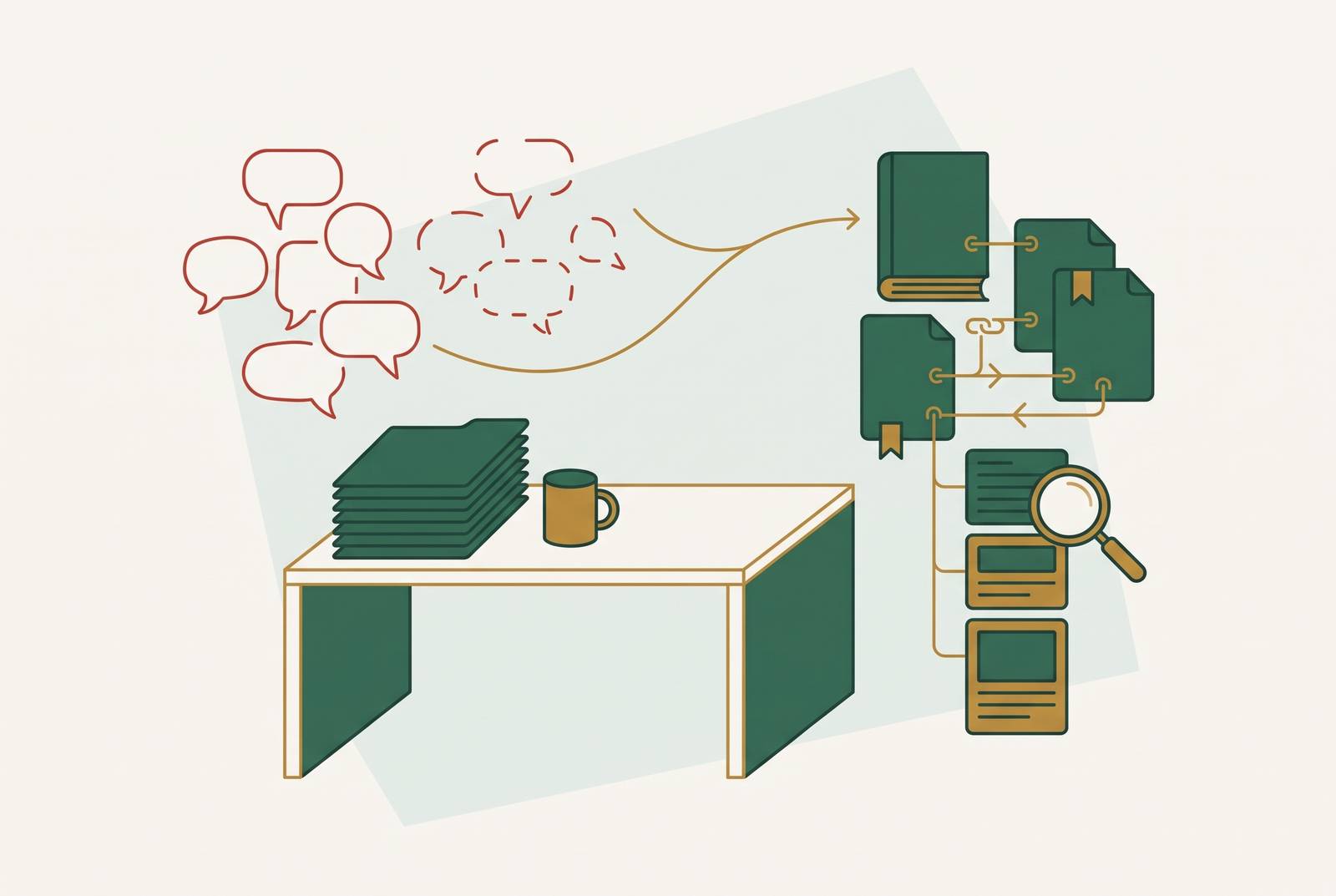
Citation-backed AI tax research makes the move from generic chat defensible by adding verifiable sourcing within familiar workflows. Options include Thomson Reuters CoCounsel Tax, Bloomberg Tax AI, and the Blue J × Legora integration, and their fit depends on the research tools a practice already uses. For federal and state questions, the decisive safeguard is a link to relevant authority that the practitioner follows and reads before relying on the answer.
Why generic AI chat tools feel sufficient for tax research until they aren't
A practitioner asks for a summary of a legal concept, receives a coherent explanation, and uses it to begin a memorandum. The next request brings back an outline, then authorities that might support it. It feels like the same research done faster. Because the output uses professional language and familiar citation formats, the shift from drafting assistance to apparent legal authority can pass unnoticed. Nothing in the presentation necessarily signals that the underlying task has changed.
The weakness lies beneath that polished surface. A general-purpose large language model predicts likely language patterns rather than necessarily retrieving an answer from verified tax authority. It can produce a plausible case name and a realistic reporter reference without identifying an actual decision. Fluency therefore offers no reliable test of accuracy, even when the surrounding explanation fits the practitioner’s understanding of the issue.
Traditional research platforms such as Checkpoint, Bloomberg Tax, and CCH work differently from generic language models. Treating the two as interchangeable obscures the distinction between generating an explanation and locating authority. The trap is that a useful drafting experience gives the practitioner no dependable way to distinguish a supported proposition from an invented one without further research.
Three specific failure modes that make tax uniquely exposed to AI hallucinations
Tax research demands jurisdiction-specific precision, current law, and sound assumptions across connected calculations. Those requirements amplify three distinct failure modes. The first is fabricated authority that looks legitimate. Proper formatting can give a nonexistent case the appearance of credibility, especially once it enters a client memorandum or filing. A citation’s visual conformity becomes a substitute for evidence that the authority exists and supports the proposition.
The second failure is outdated law presented without qualification. A model trained on a static dataset can apply superseded guidance with the same confidence it gives current law. Its answer need not disclose that limitation. Because tax rules change frequently, an explanation may be internally consistent yet unsuitable for the period or jurisdiction under review. The practitioner must distinguish a plausible statement of law from the law applicable to the engagement.
The third failure is propagation through calculation chains. A wrong assumption can flow into provision calculations, effective tax rate analysis, and disclosures without any visible warning. The error can spread across entities and reporting periods, so several outputs can appear to agree even though they all rest on one unsupported premise. That consistency is particularly deceptive because agreement among downstream results does not establish that their shared premise was correct.
What the disciplinary record now shows about professional consequences
The Supreme Court of Georgia suspended prosecutor Deborah Leslie for six months on May 5, 2026, after filings that contained AI-generated, unverified citations. A murder appeal filing included at least five citations to nonexistent cases, citations that did not support the asserted propositions, and quotations that did not accurately reflect the cited opinions. Across the filings, the total was 21 AI-generated, unverified citations. Leslie initially claimed that the filing had been altered before admitting AI use.
That was a legal disciplinary case. Its relevance to tax practitioners is an analogy about professional responsibility. For practitioners before the IRS, the corresponding framework runs through the Office of Professional Responsibility and Circular 230. The source of the unsupported statement does not remove the practitioner’s responsibility for submitting it.
Circular 230 Section 10.51(a)(13) addresses giving a false opinion knowingly, recklessly, or through gross incompetence. Fabricated authorities in unverified AI research can implicate that provision, with potential consequences including censure, suspension, or disbarment. The Clinco Tax Court case in 2026 addressed potential AI hallucinations, but it did not establish a ruling that AI misuse itself warranted those Circular 230 sanctions. The professional exposure rests on the governing standard and the practitioner’s conduct.
What OPR Alert 2026-19 changed about the practitioner's duty of verification
OPR Alert 2026-19, issued June 24, 2026, clarified that the existing Circular 230 duty of due diligence cannot be delegated to an AI process. Practitioners must thoroughly review AI-created documents before delivering them to clients or submitting them to the IRS. Verification is an affirmative professional obligation. It extends to facts, citations, and calculations, so reviewing the prose alone does not satisfy the standard.
The Alert also connects technological literacy to competence under Section 10.35. Practitioners must understand how their tools work, where they fail, and when their output is unsuitable for IRS use. This is a practical competence requirement. A practitioner need not treat a fluent answer as reliable merely because the tool is useful for other tasks. Understanding the boundary between drafting assistance and authoritative research is part of deciding when reliance is justified.
The Alert flags charging for AI-assisted work and then billing again as though it had been performed manually as a potential Section 10.27(a) violation. It also warns that uploading a client’s prior-year return to a public AI platform may lead to IRC Section 6713 liability even if no disclosure outside the platform occurred. The central research requirement remains active review of the substance before the work leaves the practice.
Which AI tax research tools provide cited sources, and how do they work?
Retrieval-Augmented Generation, or RAG, finds relevant material in an outside collection of documents before it generates a response. In citation-backed tax research, a curated library provides the grounding that generic model memory cannot. The generated response connects to retrievable, linkable sources. Those sources can include the IRC, Treasury regulations, and case law, allowing the practitioner to inspect the authority rather than reconstruct the research from a generated citation.
That architecture addresses the earlier failure modes in different ways. An updated corpus can reduce dependence on stale training data, while retrieval from real documents reduces opportunities to invent authority. Sources that can be traced also make it easier to check the assumptions that feed into calculation chains. Traceability gives the reviewer access to the legal premise that must be tested before the calculation’s result can be trusted.
Thomson Reuters CoCounsel Tax provides citation-backed answers grounded in Checkpoint content and other authoritative sources. Its fit is clearest where that research content is central to the practice. Bloomberg Tax AI offers tools built for tax professionals that use verified intelligence and bring in data in real time. The distinction is the research environment supporting the answer.
Legora announced its Blue J partnership in October 2026, so eligible customers can query Blue J directly within Legora. The integration uses the Model Context Protocol and provides inline citations linking back to sources. Its practical fit is an existing Legora workflow. These options illustrate different ways to bring cited research into familiar systems, rather than requiring every practitioner to adopt the same interface.
RAG reduces hallucination risk but does not eliminate it. Independent research on retrieval-grounded systems shows that fabricated citations remain possible, so near-zero claims overstate what the architecture guarantees. For complex federal and state questions, tools should expose the underlying authority for review.
The human-plus-AI verification gap that purpose-built tools alone cannot close
John A. Barrick, Scott L. Summers, and David A. Wood’s 2026 study compared tax research memoranda prepared by graduate tax students with AI, without AI, and by AI alone. Human+AI memoranda had materially higher hallucination rates than AI models working alone. With AI, participants finished sooner and wrote with better mechanics, but their hallucination rates did not change significantly. The study concerned graduate students, but it directly challenges the assumption that adding a reviewer automatically resolves the problem.
A reviewer can improve grammar, structure, and readability while leaving an unsupported proposition intact. Fluent output encourages that misplaced confidence. Citation-backed tools complete only part of the safeguard because their citations must be followed to the primary source. The relevant review asks whether the source exists and supports the proposition being used.
Fidan Badalova and Philipp Mayr’s 2026 assessment examined tools including CheckIfExist, HalluCiteChecker, Hallucinator, HalRef, and RefChecker. They found problems with reference extraction, gaps in metadata and database coverage, and results that were inconsistent. Their findings support preliminary screening. Automated detection can help direct attention, but it cannot replace reading the authority. The transition succeeds when accessible sources and structured human review work together.
How to move from generic chat to citation-backed research without rebuilding existing workflows
The move begins by finding where generic chat is used in an engagement. Initial issue spotting and question framing are lower-risk uses when their output remains preliminary and does not reach the client. Authority identification is the first replacement point. That is where a generated citation can become the foundation of a work product, so a citation-backed tool belongs there before the practice attempts a broader workflow change. Generic chat can remain available for brainstorming and outlines where citations are not at stake.
When the research tool returns an authority, the next decision is whether it can enter the memorandum. The practitioner should follow the link and read the primary document before using the citation. This becomes a mandatory research checkpoint. It tests support for the proposition before polished drafting makes the conclusion harder to question. At the drafting stage, the review must still cover facts and calculations, rather than assuming that verified citations validate every part of the document.
Calculation chains need close review because the assumptions behind them can affect several outputs. The practitioner should verify the authority behind an assumption before relying on the resulting provision calculation, effective tax rate analysis, or disclosure. This places review where an error begins. It also keeps the migration focused on the steps with the greatest citation and compounding risk, rather than replacing tools that remain useful for preliminary work.
Crowe LLP’s adoption of Thomson Reuters’ Additive to turn unstructured Schedule K-1 data into structured information illustrates a complementary principle. Automating a defined intake task can leave practitioners more attention for review where more is at stake. It is not a substitute for research verification. Systems built to handle document collection, intake triage, and compliance pre-checks can also cut routine work, leaving more room for the primary-source checkpoint within the existing engagement.
Before client documents enter a new platform, the practice should confirm its data-handling policy. Unauthorized disclosure, including disclosure to AI platforms, can lead to liability under IRC Section 6713. The team should also receive a briefing on the Alert’s billing implications so that AI-assisted time is recorded accurately. These are bounded decisions before deployment. They allow the sourcing change to fit within the practice’s professional obligations.
What defensible AI-assisted tax research looks like once the transition is complete
A completed transition leaves a recognizable research workflow with a stronger evidentiary foundation. Every citation in the work product traces to a primary source the practitioner has read. Review covers the facts and calculations as well. The practitioner can show that the AI output was examined rather than merely generated, meeting the OPR’s requirement for active verification without treating the tool as the final authority.
Citation-backed tools reduce the search burden by surfacing primary sources directly. That shifts practitioner effort toward confirming the authority and applying it to the client’s facts. The advisory role remains distinctly professional. Interpreting the law, anticipating IRS scrutiny, and explaining the implications for the client are not displaced by retrieval. They become the focus once the source foundation is established.
No tool or workflow removes hallucination risk entirely, but a verified-source process makes that risk visible and manageable. Corporate clients increasingly expect AI-enabled quality improvements from professional service providers, making both speed and defensibility relevant to the client experience. A practice can demonstrate those qualities together. With sourcing built into research and verification built into review, practitioners can use AI efficiently while retaining control over the authority behind their advice.
Sources
- Detecting and Correcting Reference Hallucinations in Commercial LLMs and Deep Research Agents
- Citing the Unseen: AI hallucinations in tax and legal practice: A comparative analysis of professional responsibility, procedural legitimacy, and sanctions by Pramod Kumar Siva :: SSRN
- Who Hallucinates? Evidence from Human, Human+AI, and AI-Alone Tax Research by John A. Barrick, Scott L. Summers, David A. Wood :: SSRN
- An evolution of tax tools and how agentic AI will shape 2026
- How tax professionals integrate AI into daily workflows