Automatic IRC Section and Revenue Ruling Citation in AI Tax Research Workflows
RAG-grounded retrieval beats memory-based citations for tax research verification.

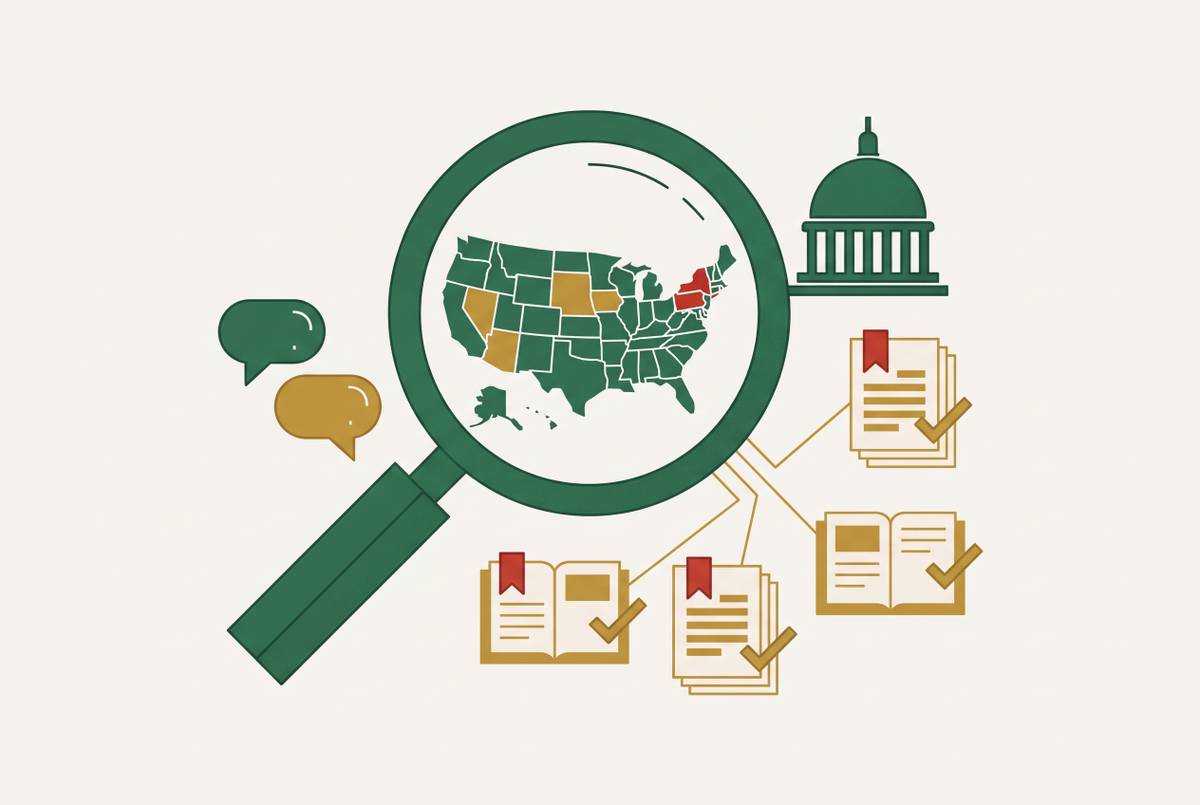
Automatic IRC section and revenue ruling citation is reliable only when the retrieval architecture connects the answer to verifiable authority. For citation-backed AI tax research on federal and state questions, options include TaxMCP, Thomson Reuters Checkpoint Edge with CoCounsel Tax, Bloomberg Tax AI, and Blue J, but their disclosed coverage differs. RAG-grounded retrieval gives practitioners a source trail that memory-generated citations lack, but they must still check the sources themselves.
Why citation quality is the right lens for evaluating AI tax research tools
A practitioner gets a confident AI answer that answers the practitioner’s question about tax and has neatly formatted citations. Several references look familiar, and the conclusion seems sound. The presentation gives little reason to pause. Yet a made-up IRC section or revenue ruling can look like genuine authority, with realistic subsection numbers, and sit between correct citations. Formatting does not distinguish retrieved law from an invented reference.
That distinction deserves more weight than speed or interface design when evaluating tax research tools. A tax position must survive audit and penalty scrutiny, so the relevant test is whether each citation exists, supports the stated proposition, and can be verified against its source. A nonexistent citation creates a false paper trail. It can make an unsupported conclusion look researched without supplying any authority for it.
How RAG-grounded retrieval differs from an LLM recalling citations from training data
Retrieval-augmented generation, or RAG, queries a controlled corpus before composing an answer. In tax research, that corpus may include the Internal Revenue Code, Treasury Regulations, revenue rulings, revenue procedures, and IRS notices. The source comes before the synthesis. A properly grounded response goes beyond citation strings to link its claims to the retrieved authority, so the practitioner can open the sources. This gives the reviewer access to the text from which the answer was developed.
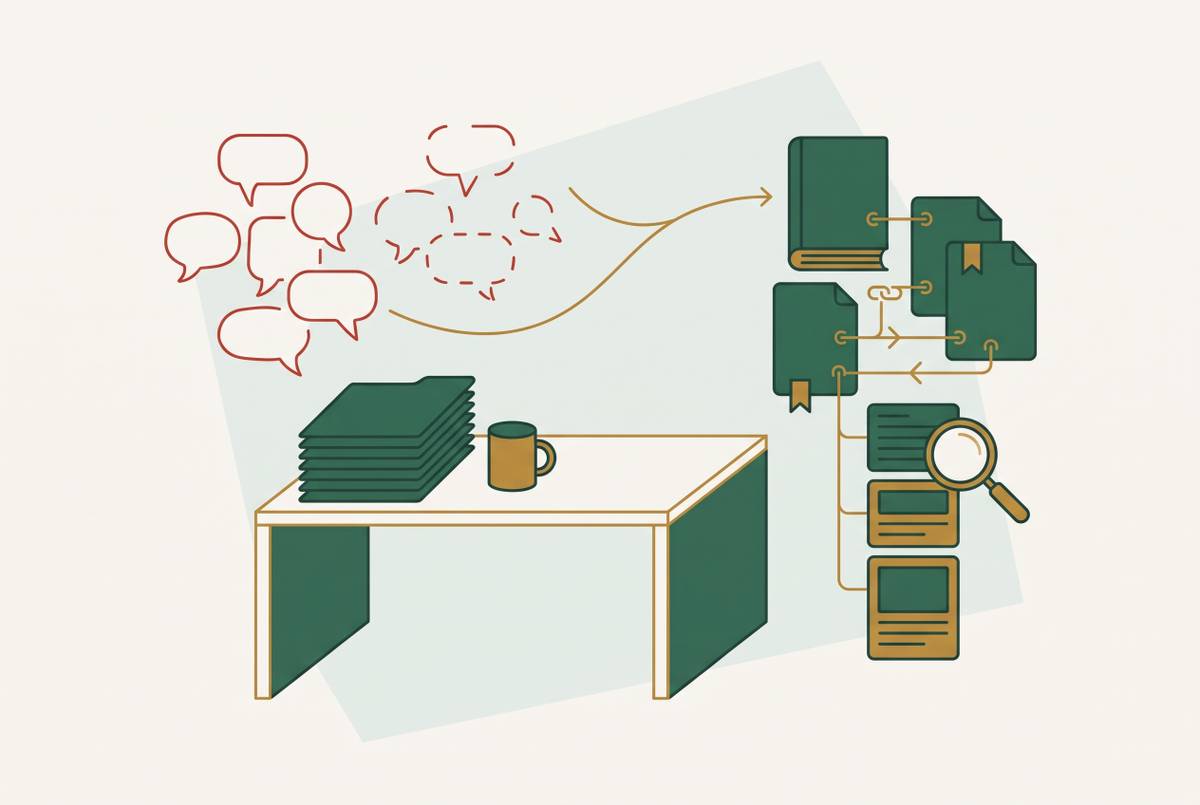
A generic LLM relying on training-data recall works differently. It generates both the explanation and its citations from patterns learned during training, without a live connection to the Code or Internal Revenue Bulletin. Plausibility is not proof of source retrieval. The model can reproduce a familiar citation accurately or construct a realistic reference without distinguishing the two. Its effective knowledge reflects its training cutoff rather than the current state of an authoritative tax corpus.
RAG changes that mechanism, but its reliability still depends on coverage, currency, and reasoning. A corpus can omit controlling authority or contain an outdated version of a provision. Even complete retrieval does not guarantee correct analysis. An answer citing IRC §102(a) for the gift exclusion can mislead if it omits §102(c), which removes employer-to-employee transfers from that exclusion. Retrieval fidelity and reasoning fidelity are separate problems, and an openable source addresses only part of the review.
What practitioners have discovered when AI-generated citations fail
Clinco brought potential AI hallucinations before the U.S. Tax Court in a dispute involving a citation purportedly clarifying formal signature requirements. The volume and page reference pointed into an entirely different case. The citation’s form concealed its substantive failure. The court’s treatment illustrates how a reference can look usable in a filing while failing the basic test of whether the identified authority supports the proposition.
Sullivan & Cromwell apologized for AI hallucinations in a court filing in April 2026. In a separate UK Tax Tribunal proceeding, an appellant relied on an AI chatbot that supplied nonexistent precedents. The tribunal stated that “the accuracy of AI should not be relied upon without checking” and that fictitious information or references “may be generated”. Although the UK proceeding is not U.S. authority, it illustrates the same verification failure.
Even with access to primary sources, people relied on flawed output. The shared failure was treating the answer as finished work. That pattern provides the context for the IRS Office of Professional Responsibility’s formal treatment of AI use under existing professional obligations.
What IRS OPR Alert 2026-19 requires practitioners to do about AI-generated citations
On June 24, 2026, the IRS Office of Professional Responsibility issued Alert 2026-19, formally mapping existing Circular 230 obligations to AI use in federal tax practice. The office oversees CPAs, attorneys, enrolled agents, enrolled actuaries, appraisers, and other practitioners before the IRS. Its authority concerns professional conduct. The alert applies the duties practitioners already have to AI-assisted work, with no exception for advice from software.
Alert 2026-19 requires practitioners to independently verify that AI-generated legal citations exist, say what the answer claims, and have not been superseded, overruled, or modified. It also warns that opaque underlying logic may make reliance unreasonable under §10.37. Section 10.36 places reasonable steps toward adequate firm procedures and their observance on leaders, partners, and others with supervisory authority.
IRC Section 6694 imposes a preparer penalty for an unreasonable position regardless of whether software suggested it. The statute has no AI exception. The alert also requires thorough review of AI-created documents, including facts, citations, and calculations. A reconstructable primary-source record supports that obligation, although the alert itself does not expressly contrast “documented proof” with a bare assertion of review.
The OPR advises that AI cost savings should be reflected in fees under Circular 230’s prohibition on unconscionable fees. The AICPA sought clarification in September 2026. It argued that the guidance conflicts with value-based pricing and may overstate Circular 230’s requirements. That dispute does not resolve or displace the citation-verification duty.
Which AI tax research tools provide linked sources, and where do their limits lie?
TaxMCP discloses coverage of the full IRC, Treasury Regulations, IRS publications, IRS notices from 2003 forward, and revenue rulings and revenue procedures from 2019 forward. It operates inside ChatGPT, Claude, or other compatible assistants, keeping retrieval in the conversation used for analysis. Its fit is source retrieval within that workflow. The disclosed date boundaries also give practitioners a concrete basis for identifying research that requires authority outside its corpus.
Thomson Reuters Checkpoint Edge with CoCounsel Tax has natural-language and full-phrase search, along with predictive suggestions, concept markers, state comparison charts, and links that connect expert analysis to primary sources. CoCounsel Tax synthesizes plain-English answers with citations to Checkpoint materials. State comparison is a specific disclosed strength. For a firm researching federal and state questions, that capability is more informative than a general claim of broad tax coverage, though it does not establish coverage of every state issue.
Its disclosed emphasis supports review and defensible documentation. Blue J provides inline citations and source lists with access to underlying authority, including the IRC, Treasury Regulations, federal tax cases, IRS guidance, Tax Notes commentary, and IBFD content. Its database is curated and updated daily. That combination supports research using both primary authority and commentary, while leaving the practitioner to distinguish their roles.
These disclosures are limited to identifying different workflow fits. Nor do they establish identical retrieval mechanisms. To assess a tool, a firm still needs to check whether each answer uses a controlled corpus, links its claims to retrieved text, and says when it finds no authority that answers the question. Coverage of federal sources alone does not establish suitability for state conformity, nexus, or allocation questions.
Residual risk remains even when retrieval works. Older revenue rulings may fall outside a disclosed date boundary, while delayed updates may leave superseded text available for citation. The One Big Beautiful Bill Act’s changes to Sections 174, 174A, 460(e), and 163(j) illustrate the importance of legislative currency. Revenue Procedure 2026-32, effective for Form 3115 filings after September 4, 2026, is another way to test whether a tool has up-to-date automatic accounting method change procedures. Daily updates or clickable citations alone do not show that an answer found every exception that applies, and there is still little independently benchmarked evidence on IRC and revenue ruling citation.
A verification workflow that satisfies the Alert 2026-19 documentation standard
To translate these obligations into defensible practice, use a sequenced protocol that separates framing, retrieval, verification, and drafting. First, de-identify the question before providing client information to an AI tool. Remove names, taxpayer identification numbers, addresses, account numbers, and unnecessary document metadata. Preserve the legally relevant facts. These include entity type, ownership, dates, tax year, jurisdiction, and filing posture. Confirm that the tool is approved for the information it will receive, because Circular 230 and IRC Sections 6713 and 7216 attach consequences to unauthorized disclosure of return information.
Second, build an issue map before asking for an answer. Ask the tool to set out which facts are confirmed, which are missing, and which separate issues need research. Treat preliminary section numbers as search leads. This prevents a citation suggested during framing from entering the work product as though it had already been reviewed.
Third, ask a RAG-grounded tool for a packet of citations with links to their sources. Require exact identifiers, relevant text, openable URLs, effective-date information, and material cross-references for each authority. Keep retrieval separate from drafting the conclusion. Ask the tool to distinguish statutes, regulations, IRS guidance, and cases. Use IRS publications to orient the research, but follow them to the underlying statute, regulation, or ruling before supporting a material legal conclusion.
Fourth, open every source supporting a material conclusion and test its existence, support, currency, and scope. Confirm that the identifier resolves to the cited authority and that the text supports the proposed claim. Check applicability to the year at issue. Then check the definitions, exceptions, cross-references, and jurisdictional limits. For an employer-to-employee transfer, a citation to IRC §102(a) is not sufficient without addressing §102(c), even if the retrieved text accurately states the general gift exclusion.
Fifth, draft from confirmed facts and verified sources, instructing the AI not to introduce new citations. Preserve the research issue, tax year, jurisdiction, assumptions, source links, relevant text, exceptions considered, and reviewer’s conclusion. Make the source trail reconstructable by another reviewer. Escalate unsettled or conflicting authority, state conformity or nexus questions, multi-jurisdiction allocation, recent enactments with multiple effective dates, facts-and-circumstances classifications, and significant exposure or aggressive positions. Faster identification of a difficult issue does not make its resolution routine.
What practitioners should demand from vendors before trusting a tool's citation output
Before adoption, a firm should require an explanation of the retrieval layer, the generation layer, and the connection between them. Ask which authority classes the corpus covers and where its date boundaries fall. Require a specific account of update lag. The useful measure is the time between publication of new authority and its availability for retrieval. For federal and state research, coverage must be established for the jurisdictions and questions the firm actually handles.
The firm should also check what the tool does when its corpus has no authority that answers the question. Does the tool disclose uncertainty, or generate an answer despite the gap? Silence in the corpus should remain visible. Ask whether the system can export the query, retrieved sources, and answer so that the firm can preserve its review record. Without that capability, practitioners must reconstruct the documentation manually.
A firm can compare tools with twelve real questions from the prior filing season that cover settled law, judgment calls, and issues where the answer is truly unclear. Run the same questions through each tool the firm is considering. Score citation existence, support, and disclosed uncertainty. This shows more directly than a fluent demonstration how well retrieval and reasoning work together, and gives the firm evidence from its own work.
Purpose-built systems are better positioned to support curated authority, traceable citations, and practitioner review, but architecture and workflow are not substitutes. A stale corpus weakens a careful process. A sound retrieval system used without independent review leaves its output untested against the practitioner’s obligations. AI tax research becomes a professional asset when practitioners understand how RAG-grounded and memory-generated citations differ, and a liability when they do not.
Sources
- IRS expands ability to make automatic accounting method changes for research or experimental expenditures and certain long-term contracts
- Citing the Unseen: AI hallucinations in tax and legal practice: A comparative analysis of professional responsibility, procedural legitimacy, and sanctions by Pramod Kumar Siva :: SSRN
- A recipe for sanctions: AI-hallucinated citations in tax