Why Tax-Native AI Outperforms Retrofitted Accounting Software for Practitioner Compliance Workflows
Native tax AI avoids the brittleness built into retrofitted accounting engines.

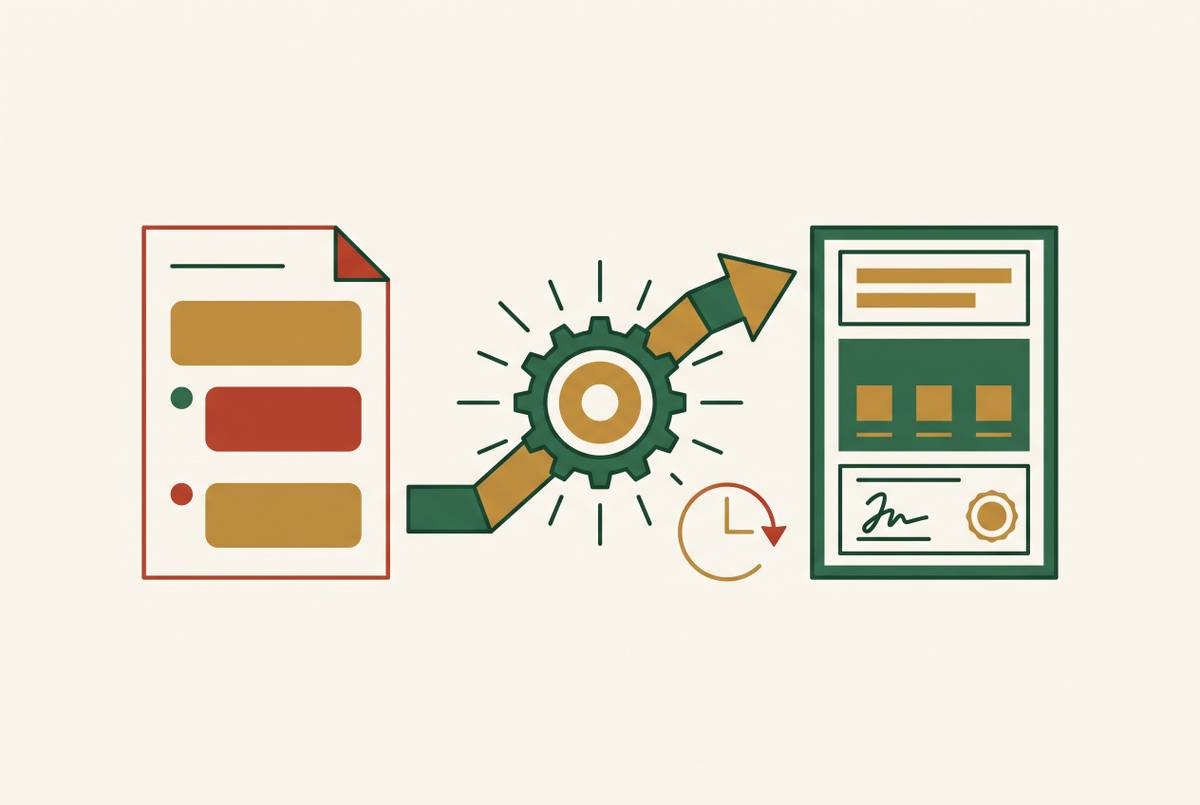
Purpose-built AI for tax document analysis and compliance automation outperforms retrofitted accounting software when machine learning is built into the workflow. With that architecture, raw documents can pass through extraction, reconciliation, drafting, and review without practitioners having to move the work from each step to the next. The advantage is structural, but it does not remove the firm’s responsibility for final review.
Why the architecture of tax software determines how it handles compliance work
A compliance platform’s architecture determines what information it can accept, how it processes that information, and where human intervention becomes necessary. Tax-native platforms put machine learning at the core of the workflow. Retrofitted platforms start with form-driven, rule-coded engines and add AI on top. Interfaces that look alike can therefore hide big differences in how the software works.
That distinction affects more than extraction speed. It affects how software handles documents it has not seen before, regulatory changes, state-specific rules, and the evidence needed to explain a prepared return. Retrofitted tools can still handle tax preparation well, especially when the inputs and rules stay the same. Their limits emerge when an AI layer must pass its results into an engine designed around anticipated cases. Rule-coded engines are brittle by design.
How rule-coded engines produce brittleness that is structural, not accidental
A rule engine encodes tax logic by hand. Its developers specify how particular inputs should be treated, which calculations apply, and how results populate forms. The workflow then runs through import, preparation, and filing in a batch sequence. It works correctly when the rules are current and the inputs match the formats the developers anticipated.
When the IRS updates a form or a regulation changes, a developer must write the corresponding rule before the engine can handle it correctly. An unanticipated edge case similarly requires a new rule or a manual override. The rule engine itself has no fallback reasoning for a case outside its instructions. Better engineering can improve coverage, but it cannot remove that requirement.
OCR or AI tools may extract information from a document while the software beneath them still needs structured form inputs. This leaves a boundary between the model output and the tax preparation that follows. Unless the workflow beneath the AI changes, practitioners remain responsible for resolving cases that do not fit the engine’s established inputs and rules.
Where the architectural gap becomes a visible workflow failure in retrofitted platforms
Document extraction makes that boundary visible early. Traditional platforms with OCR bolt-ons typically have extraction accuracy of 70–85%, so practitioners must check information that purpose-built extractors can resolve on their own. Extracted information must be able to move into preparation without extensive mechanical checking.
A static knowledge base or infrequently updated rule engine can leave a firm preparing work under outdated rules because software releases do not necessarily track regulatory change. Multi-jurisdiction work adds another constraint. Tools trained primarily on federal rules can perform poorly on state-specific nuances, especially for less common states, when those distinctions were not part of the underlying design.
Integration can also stop at a licensing boundary. Thomson Reuters Checkpoint Edge illustrates this form of friction because CoCounsel Tax is a separate purchase. Thomson Reuters General Terms bar the use of Thomson Reuters content with another professional AI tool, either directly or through an interface such as an MCP. This is a specific restriction on combining content and tools in Thomson Reuters workflows.
Iterative improvement can reduce individual weaknesses in a retrofit. It does not, by itself, change what the underlying engine can accept or act on. A better extractor may still feed a batch preparation process, and a research tool that works well may still need a separate license. Closing those gaps requires changes to the workflow beneath the feature.
What tax-native architecture actually does differently at each workflow stage
With tax-native architecture, monitoring, drafting, and review run continuously in place of the batch sequence. Its starting point is raw information, including bank feeds, receipts, prior-year returns, and IRS correspondence. Models extract, classify, reconcile, and draft from those materials with little help from people. Purpose-built AI-native extractors consistently have document extraction accuracy above 95%, though extraction accuracy alone does not show that a return is correct.
The difference continues after information has been extracted. Platforms built to use current IRS material in their calculations can apply current-year thresholds, phase-outs, and rule changes without anyone having to update the software by hand. Perplexity describes its tax modules as built on the Agent Skills protocol and continuously updated and grounded in IRS materials and regulations. That supports retrieval and application of current rules. It should not be confused with a claim that the protocol automatically ingests every threshold.
Platforms trained from the ground up on multi-jurisdiction data handle state-specific nuances as part of the workflow, so those cases need not wait for the software to support them. An integrated audit trail then records model decisions, extractions, and human overrides as preparation proceeds. The evidence develops with the work itself. Traditional processes that collect supporting evidence after manual preparation leave more room for gaps.
This changes the practitioner’s task without eliminating it. Review workflows can show prior-year changes, flag statistical outliers, and provide a structured checklist so practitioners spend more time on judgment calls and less on repeated transcription checks. Automated extraction of carryforwards, elections, and client details also reduces the manual work of onboarding. These gains arise because the same workflow connects documents, preparation, and review, rather than treating each as a separate AI opportunity.
The agentic turn: how industry launches in 2026 clarify the architectural divide
The 2026 launches make integration a concrete product question. Wolters Kluwer Tax & Accounting launched agentic tax return preparation within CCH Axcess Tax on October 23, 2026. The capabilities were built directly into the cloud-native environment where firms already manage workflows. That placement is significant because autonomous execution depends on what an agent can do inside the preparation process.
CCH Axcess uses prior-year information and current source documents to find what is missing, extract supported tax data, and show diagnostics. It also links calculated amounts directly to supporting evidence and generates workpapers for the final handoff. The connection to evidence is especially relevant to review. It places document processing and the explanation of calculated amounts within the same working environment.
Wolters Kluwer launched agentic tax preparation in TaxWise, powered by Expert AI, on October 5, 2026. That launch positioned preparation as a review-first workflow. Thomson Reuters launched the next generation of CoCounsel Tax, Audit & Accounting in the same week as the CCH Axcess launch, emphasizing fully agentic AI designed to perform calculations and produce review-ready documents. These launches describe distinct implementations.
“Agentic” describes a task pattern. The label indicates multi-step execution, but it does not establish whether the agent sits inside the core workflow or above a rule-coded substrate. The relevant distinction is the agent’s relationship to documents, calculations, evidence, and handoff.
Why the IRS's own technology upgrade raises the cost of architectural compromise
The IRS’s use of AI moves this discussion beyond internal productivity. TIGTA’s report confirms that the IRS’s LB&I Division deployed the Line Anomaly Recommender for corporate returns. The model scrutinizes mid-market corporations by asset size. Practitioners are therefore preparing work for an enforcement environment that includes model-based anomaly detection alongside conventional review.
That changes the significance of preventable preparation errors. Low-accuracy extraction can introduce inconsistencies, while outdated rule logic can produce treatment that no longer reflects current requirements. Those weaknesses create the kinds of anomalies that detection models are designed to identify. They are not merely sources of extra staff work.
This does not establish that AI-prepared returns are inherently riskier or that a particular extraction error will trigger scrutiny. It establishes a stronger reason to distinguish reliable automation from superficial automation. The accuracy of the information entering preparation and the currency of the logic applied to it both influence the resulting return.
What Circular 230 and the practitioner liability framework mean for how architectural choices are made
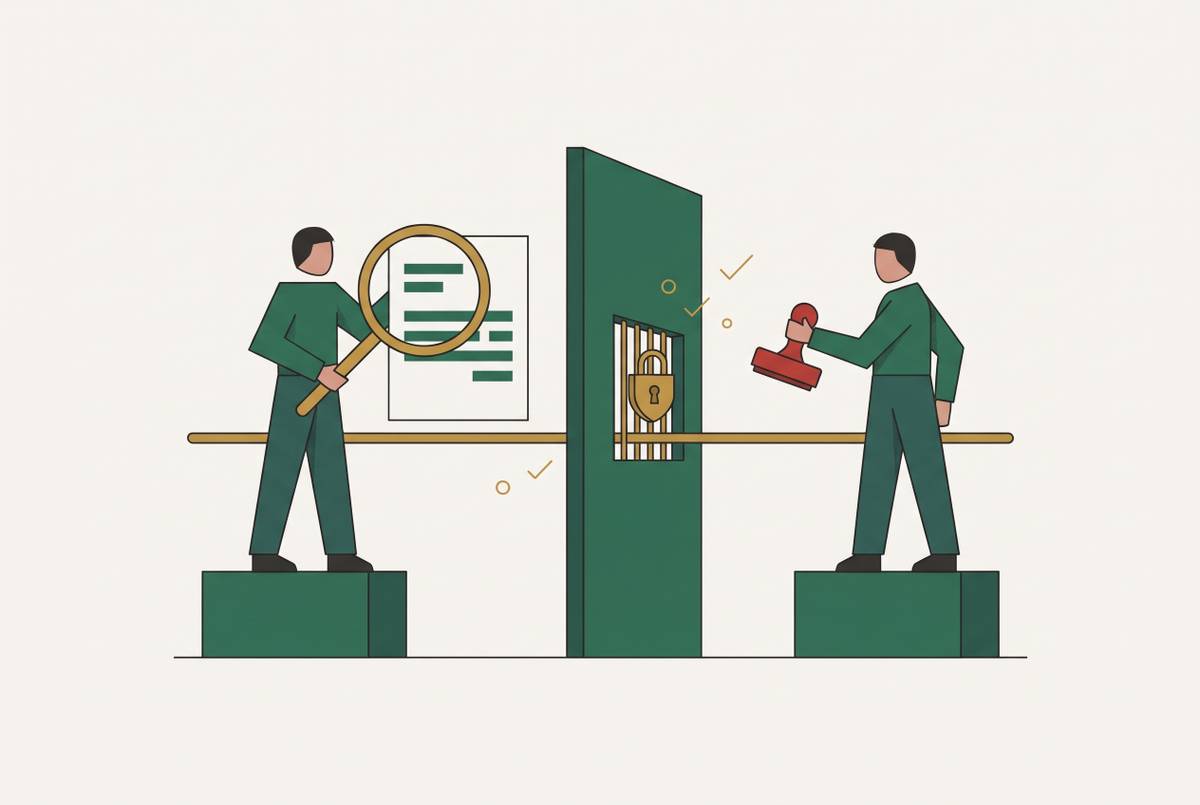
The IRS Office of Professional Responsibility issued guidance on June 24, 2026, stating that practitioners must thoroughly review all AI-created documents and language incorporated into writings before delivery to a client or submission to the IRS. The obligation remains with the practitioner. More capable automation changes how work is produced, but it does not transfer responsibility for the delivered result to the software.
A platform that records every model decision, extraction, and human override gives the practitioner a record of how the output was prepared. A platform that supplies an answer without that trail makes the reasoning and evidence harder to inspect. Under the Circular 230 due diligence framework, this is a compliance consideration.
Most current tools handle extraction and partial preparation, while the handoff to tax software remains a weak point. Legacy platforms still run their own calculations, diagnostics, and consistency checks, and the CPA firm remains involved in completing the work.
Retain human review and select tools with that handoff in view. The advantage of tax-native architecture is that integrated evidence and structured review make the practitioner’s obligation more tractable. The unresolved final mile limits full automation, but it does not erase improvements in the steps that precede it.
How should practitioners evaluate AI tools for tax document review and compliance automation?
Practitioners should look at how the workflow works beyond what the demonstration shows. A concrete starting test is whether a human must trigger each AI step and then finish each step for standard cases. If both are necessary, the tool is AI-assisted within a manual pipeline. That test applies equally to a long-established platform and a product marketed as purpose-built tax AI.
Does the platform start with raw documents or need structured form inputs? Does it bring in regulatory changes through a development release cycle or through continuous updates? Does multi-jurisdiction logic operate as a native capability or as a separately maintained rule set? The answers reveal where the firm will still need manual intervention.
Review and integration deserve the same scrutiny. Is the audit trail generated automatically as work proceeds, or assembled afterward? Is AI included in the core workflow or sold under a separate license? How does the system support the handoff to final calculations, diagnostics, and consistency checks? These checks are still needed even when extraction works well.
Thomson Reuters Institute’s 2026 AI in Professional Services Report found that a large majority of corporate clients consider AI-enabled quality improvements very important or essential, while only a small fraction say most or all of their providers deliver them. Purpose-built tax AI addresses the structural weaknesses in extraction, regulatory currency, audit trails, and multi-jurisdiction handling, but each platform must demonstrate those capabilities in practice.
The architectural gap need not remain permanent. It can narrow as retrofitted platforms invest in native AI capabilities and final-mile integration improves. Firms selecting or auditing tools today, however, must judge the workflow available today.