Cutting IRS Notice Response Time With AI Draft Workflows in Your Tax Practice
AI automates the routine intake work that slows down IRS notice responses.
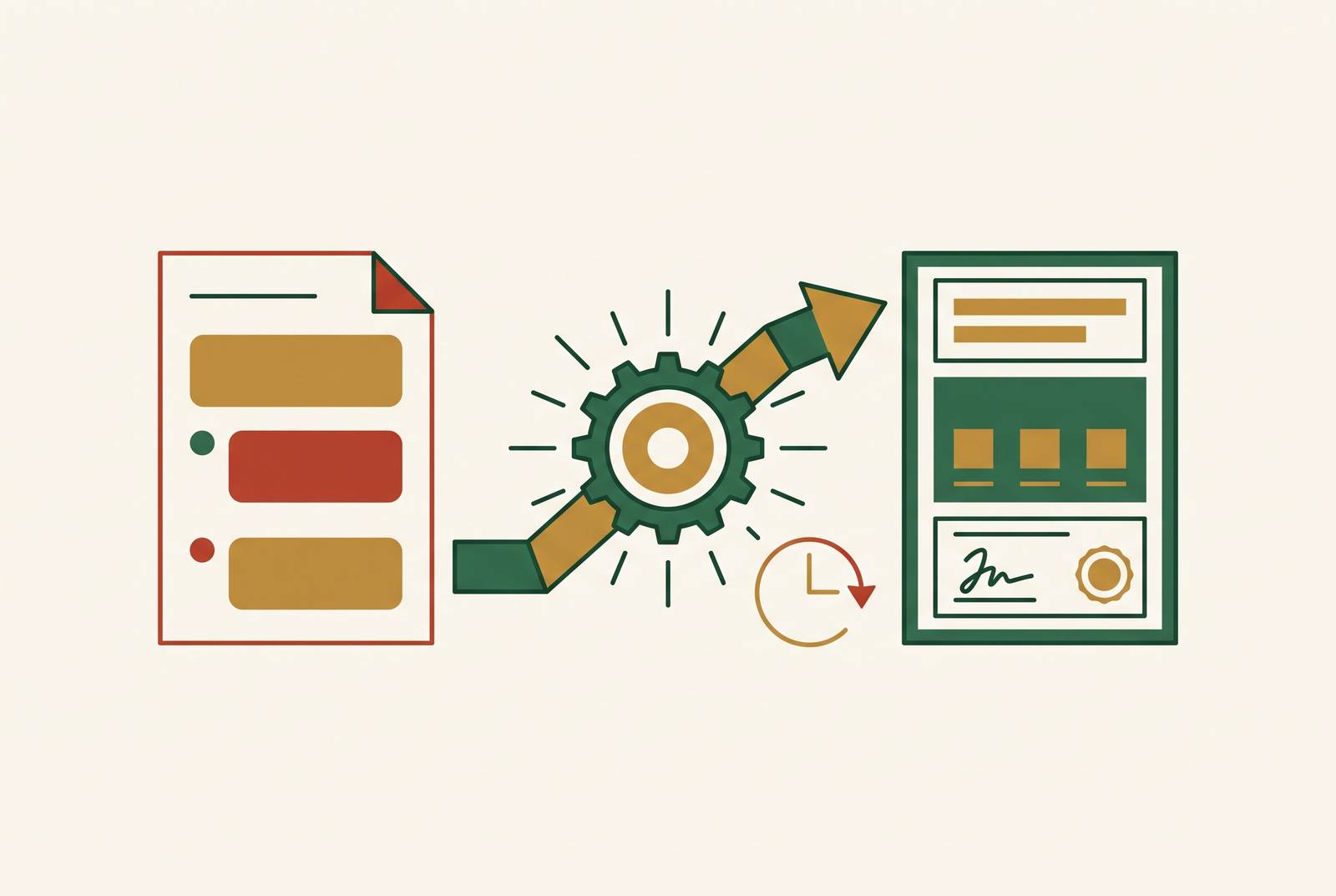
The biggest time drain in responding to an IRS notice is the work that happens before any judgment gets applied: reading the notice closely, tracking down the client's records, and putting together a formal written response with the right references to tax law. That sequence, repeated across a firm's entire notice queue, is where hours disappear. The IRS sends notices for a wide range of situations, each with its own shape: a CP2000 flags underreported income, a CP14 states a balance due, the CP501, CP503, and CP504 series escalate collection follow-ups, a Letter 12C asks for missing information, and a CP5071 or 5071C requires identity verification. Each of these triggers its own document checklist and its own response structure, so if a firm handles a stack of notices, it's really running several different intake processes at once, by hand, under a deadline. Manual, case-by-case handling holds up fine at low volume, but it buckles once notice volume climbs, deadlines shrink, and submission requirements grow more complex. Those pressures are increasing on their own: Inflation Reduction Act funding is going toward modernizing IRS technology and analytics, and one effect is that notices are going out earlier and more often. At the same time, the IRS's Simple Notice Initiative redesigned up to 200 of the most common notices sent to individual taxpayers by Filing Season 2025, and the Government Accountability Office has reported that roughly 800 notices and letters have been eliminated or consolidated. Cleaner, more standardized notices are landing on practitioners' desks now, which matters because it raises the quality of the input that any drafting process, automated or not, has to work from.
How the AI draft workflow handles each stage
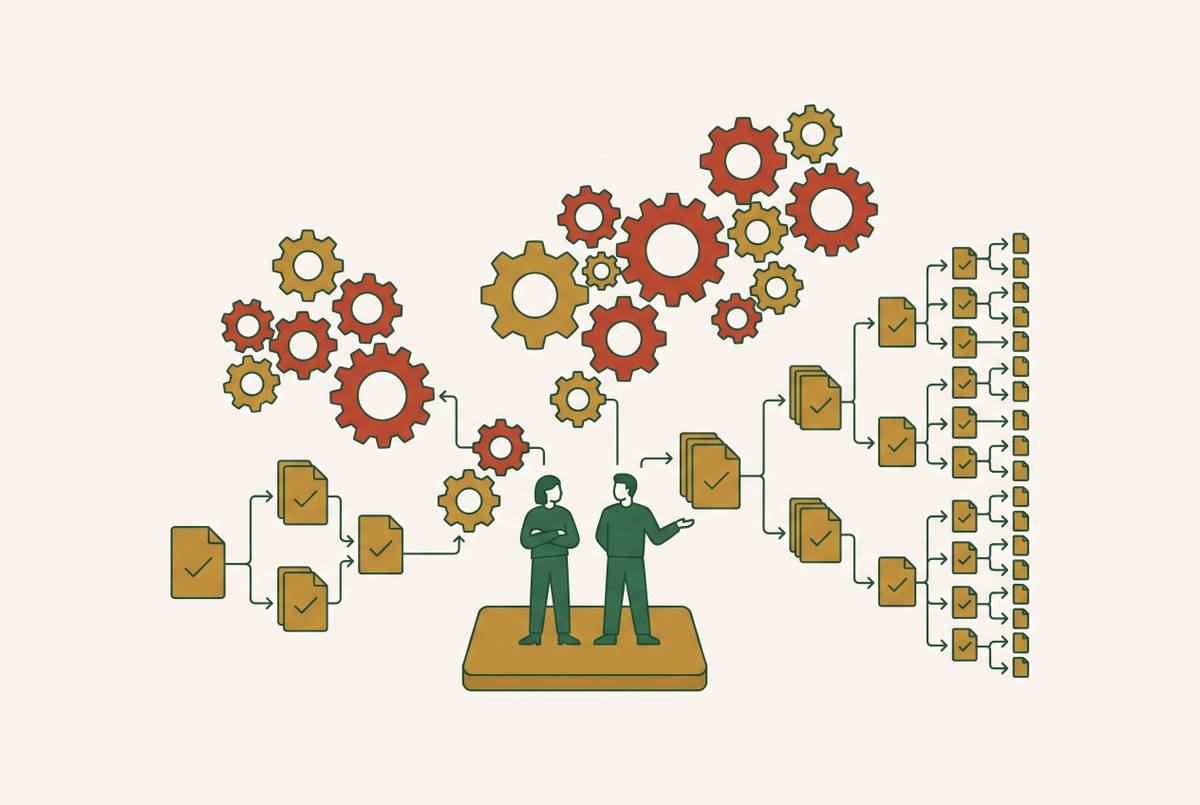
A structured AI workflow attacks this bottleneck by automating the sequence that drafting actually follows: classification, document triage, draft generation, and client communication, with a human checkpoint before anything leaves the firm. The first step is classification and fact extraction. The AI reads the notice, detects its type (a CP2000 versus a CP14, for instance), pulls out the key facts such as tax year, proposed changes, and due dates, and routes the case into the right queue with a standard checklist of what needs review and what needs to come from the client. The second step is document triage. Instead of a staff member manually working out what's missing, the AI prompts the client for the specific items the case requires, tracks what's come in, and flags where an IRS transcript would strengthen the response, pointing toward the Get Transcript option when it applies. The third step is where the draft itself gets built. So the work shifts from writing a response from a blank page to editing a structured document that already follows the IRS's own instructions, with exhibits, client communications, and citations in place. TaxGPT is one example of a tool built for this stage: it generates IRS notice responses and client emails with citations pulled directly from the IRC, Treasury Regulations, court cases, and official IRS guidance, rather than from whatever a general-purpose model happened to absorb during training. Its Document Analysis feature takes a notice dropped in as a file and returns findings tied to that specific client's facts, and its Tax Writer function produces the correspondence, memos, and engagement letters in a form ready for a reviewer to check. The fourth step covers client communication, where the AI drafts a calm, professional reply for the accountant to review before it goes out, giving the client an immediate response while the substantive work is still underway. A typical draft might read: "We received your email and are reviewing the notice. We handle these matters often, so please do not worry. We will follow up soon with the next steps." The same logic applies to document requests: the AI can generate a checklist and client email matched to the exact notice code, whether that's identity verification under a CP5071C or missing information under a Letter 12C, and it keeps track of dates so nothing slips past a deadline unnoticed. None of this replaces the practitioner's judgment. Every output at every stage is a draft, not a finished submission, and the review gate before anything reaches the IRS or the client is where the firm's professional judgment actually gets applied, which is exactly where it belongs.
Why the speed gain matters despite slow IRS processing
A natural objection follows from all this: if the IRS itself is backlogged, why does it matter how fast a practitioner drafts a response? The answer has nothing to do with how quickly the IRS processes what it receives. It has to do with statutory deadlines, penalty accrual, and firm capacity, three things squarely within the practitioner's control regardless of what happens on the other end. The IRS's own correspondence backlog grew at the end of the 2025 filing season compared with 2024, and the Government Accountability Office's 2026 report on filing season performance found that 64 percent of that correspondence was considered late, so a large share of responses had already blown past the standard 45-day window before the IRS even got to them. IRS officials have said they expect that backlog to stay high because of staff separations and ongoing training requirements, so a shrinking workforce on the government side only raises the cost of a late or defective response on the practitioner's side. The IRS's Digital Document Upload Tool lets taxpayers submit responses electronically, and those submissions get routed to the assigned employee or area, but a person still has to review them by hand. Practitioner speed sets the pace that matters for the statutory clock. It doesn't change how fast the IRS works through its queue afterward. Penalties and interest run from the original return due date, with interest on some assessed penalties starting from the date of the notice or assessment, not from whenever the IRS happens to process a reply. A slow response adds cost for the client even when the underlying tax position was correct all along. The same math applies inside a firm. Standardized AI workflows let a firm hand routine notice-response work to junior staff with confidence, while a senior preparer still reviews and signs off, which multiplies what the firm can handle without adding headcount. AI adoption among tax professionals has grown substantially year over year, and firms still running notice response as a manual, ad-hoc process are falling further behind the ones that have standardized it.
Choosing between purpose-built tax AI and general AI assistants for notice drafting
Tool choice for notice drafting is not a matter of preference once fabricated citations are on the table. A general-purpose AI assistant can produce a response that reads smoothly and still cites a court case or a code section that doesn't exist, and under Circular 230 that distinction carries direct professional consequences. The IRS Office of Professional Responsibility has pointed to recent court cases where lawyers were sanctioned for using generative AI that invented information, with penalties running from financial sanctions, often in the thousands of dollars, to public censure, mandatory ethics courses, default judgments, removal from a case, and referral to state bar authorities. The OPR has been direct that tax professionals face the same exposure. A fabricated citation sitting inside an IRS notice response fails to defend the client's position and puts the practitioner, and potentially the client, under closer scrutiny than an unaided response would have drawn. TaxGPT addresses this by grounding its output in the IRC, Treasury Regulations, court cases, and official IRS guidance, and it carries SOC 2 Type II certification with automatic redaction of personally identifiable information, which matters for firms handling sensitive client records at scale. Larger firms looking for a research-heavy option have Thomson Reuters Checkpoint Edge paired with CoCounsel Tax, which draws on a large library of primary authority and applies agentic AI to drafting tasks. One firm-level user reported in Thomson Reuters' Future of Professionals Report that work which used to take an hour was finished in five minutes. Wolters Kluwer's CCH AnswerConnect offers a comparable research-first approach, with Wolters Kluwer reporting that it frees up meaningful time each week and can expand how many clients a practitioner takes on. Marble, an AI tax research and drafting assistant built specifically for tax practitioners, approaches the same problem from the intake side: it classifies notices, extracts the relevant facts, flags missing documents, and generates formal IRS responses with citations drawn directly from the IRC, Treasury Regulations, and official guidance, keeping the review gate between the routine work and the judgment that comes after it. The tools worth evaluating for this purpose cite verifiable primary authorities rather than generating plausible-sounding ones, let a reviewer see the reasoning behind an answer rather than a conclusion alone, handle client data with enterprise-grade encryption without training on it, and fit into the practice management systems a firm already runs on. Purpose-built tax tools tend to handle the intake-and-drafting bottleneck better than general platforms for a simple reason: they're built around the specific checklist and submission structure each notice type actually demands, so a case gets routed correctly and the right documents surface automatically, instead of leaving a staff member to triage manually across a system never designed for IRS notice work.
Practitioner requirements under IRS OPR Bulletin 2026-19
The human review step described throughout this workflow is not just good practice anymore. IRS OPR Bulletin 2026-19, titled "Introductory Guidelines for Responsible AI Use in Federal Tax Practice," turns it into a Circular 230 compliance requirement, and it reaches competence, due diligence, written advice standards, billing, and data handling all at once. This is current regulatory guidance already in effect, not a proposal under review. Under Section 10.35, covering competence, practitioners now have to understand the AI tools they use in representing a client, including what those tools can't do and where they tend to fail. If a practitioner doesn't understand the technology's limits, they risk producing a flawed filing or giving advice that doesn't hold up, and that gap in understanding is itself treated as a professional shortcoming. Under Section 10.22, covering due diligence, a practitioner cannot treat an AI draft as finished work. Every AI-generated document has to be reviewed thoroughly for accuracy before it reaches the IRS or the client, which is precisely the review gate the workflow described earlier builds in by design, not as an afterthought. Under Section 10.37, covering written advice, any advice on a federal tax matter that AI helped draft has to rest on reasonable factual and legal assumptions, with all the relevant facts actually taken into account. Projections, forecasts, and citations an AI tool produces cannot be accepted at face value and need independent verification, and if the reasoning behind an AI system's output isn't visible or explainable, leaning on that output without checking it can itself count as unreasonable reliance under the regulation. Taken together, these three provisions describe the same practitioner Bulletin 2026-19 expects: one who uses AI to clear the drafting and document-gathering bottleneck, then applies exactly the judgment the technology was never built to replace.