Choosing AI Drafting Workflows That Meet IRS and State Regulatory Notice Standards
New IRS guidance requires tax firms to build AI workflows with built-in review and oversight.
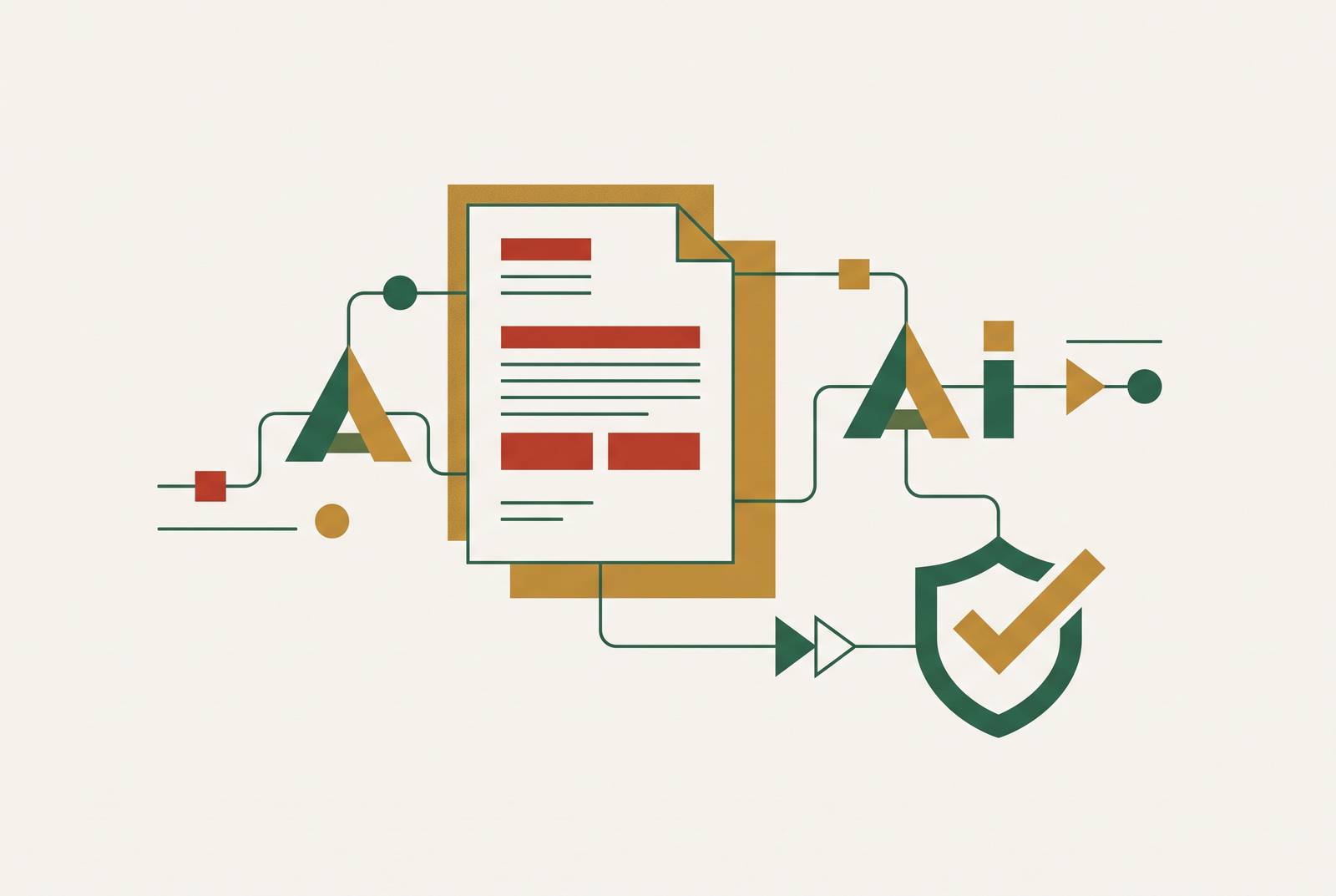
AI-drafted client memos and IRS notice responses can save tax firms time, but OPR Alert 2026-19 makes practitioner review, firm oversight, confidentiality safeguards, and transparent billing required parts of the workflow. Marble and Thomson Reuters’ CoCounsel Tax are built for tax work and can be checked against those duties. The right choice is a system that makes professional judgment easier to exercise and document.
Why OPR Alert 2026-19 marks a turning point for AI drafting in tax practice
Before June 24, 2026, Circular 230 governed tax practice, but the OPR had issued no guidance expressly mapping those duties to AI use. OPR Alert 2026-19 closed that gap without creating new rules. It identified six areas of responsibility, including due diligence, competence, firm procedures, written advice, confidentiality, and fees. Practitioners could no longer treat uncertainty about AI’s regulatory status as a reason to defer compliance.
The OPR says AI is already in nearly all professional tax firms, including in the tools they use for research and document review. Its sharper concern is generative AI, which can produce original documents and make discretionary decisions with minimal human input. That capability changes where professional scrutiny must enter the process. A workflow that allows a system to generate substantive positions without meaningful review strains obligations that remain the practitioner’s own.
What the OPR's real-world examples signal about the stakes for tax practitioners
The OPR’s central example shows how authoritative presentation can conceal unreliable content. In July 2025, the Australian government published a report prepared by Deloitte Australia that contained invented quotations attributed to a judge, references to non-existent reports, and books assigned to the wrong author. The Alert says those errors appear to have come from generative AI. Deloitte agreed to partially refund its fee. The example connects defective sourcing directly to professional credibility and the value of the delivered work.
The Alert also cites attorney sanctions for fabricated citations and warns that cases involving other tax professionals are emerging. For CPAs and enrolled agents, the concern is an error that cascades from a draft into client advice, an IRS submission, and a tax position. IRC § 6694 places personal liability on the signing practitioner for positions for which they are primarily responsible that cause an understatement, absent reasonable cause and good faith. AI generation supplies no defense to those preparer penalties.
Due diligence under § 10.22: what "thoroughly review" actually requires in an AI drafting workflow
The first workflow gate is substantive verification before delivery. OPR Alert 2026-19 requires practitioners to thoroughly review AI-created documents and language before sending them to clients or submitting them to the IRS. That review must test facts and assumptions, confirm calculations, and establish that cited authorities exist and remain current. It must also test those authorities’ support for the conclusions stated. Proofreading for tone and grammar does not meet that burden.
AI output should therefore enter the workflow as an unreviewed staff draft. Confidence scores, sourcing labels, and polished language cannot take the place of a qualified practitioner’s review. Purpose-built tax systems can reduce the friction of finding the authority without removing the duty to read it. Marble grounds tax research answers in primary authority with cited claims and can turn findings into memos and client communications. That source connection supports review, but the practitioner must still validate every citation, calculation, and legal position used in the final document.
Competence under § 10.35: why understanding how an AI system works is now a professional requirement
Document review depends on the reviewer’s ability to recognize how the system might fail. Section 10.35 requires the knowledge, skill, thoroughness, and preparation needed for the matter, and the Alert expressly brings technological literacy within that standard. Practitioners must understand how using pattern recognition to generate content differs from reasoning from authoritative sources. They must also recognize where errors, bias, or hallucinations are likely in the particular workflow. The OPR warns that a lack of technological literacy can lead to wrong advice or errors in filings.
This obligation requires a competent judgment about whether a particular output is suitable for an IRS matter. A general-purpose model and a tax research system have different limits, even when both sound sure of their answers. When weighing tax-specific options such as Marble, practitioners should check what the system can and cannot do. That understanding is the foundation for tool selection and a skill to acquire before deployment.
Firm procedures under § 10.36: the supervisory obligations firm leaders cannot disclaim
When staff share an AI workflow, the firm must have procedures that put individual competence into practice. Section 10.36 places responsibility on partners, managing directors, and supervising practitioners as well as on the person entering a prompt. Under § 10.36(b), willfulness, recklessness, or gross incompetence in failing to take reasonable steps to establish and follow adequate procedures can expose a supervisor to discipline. Assigning AI oversight to an IT or compliance function does not disclaim that responsibility.
The Alert calls for thorough staff training, written rules for keeping data secure and checking accuracy, and careful vetting of third-party tools before staff use them. These controls govern who may use AI, for which work, and under what review conditions. Unsupervised adoption of consumer tools bypasses that structure. Documentation must show that vetting occurred and procedures were followed. Firm leaders therefore need a written process for approving each tool used to draft work for clients or submissions to regulators.
Written advice under § 10.37: how AI-drafted client communications trigger the formal advice standard
A client email can trigger the written advice standard as readily as a formal opinion. For example, an AI-drafted email advising a client on a tax position falls within § 10.37 even if it is short and routine. The substance of the communication governs application of the written advice standard. Advice containing a tax position, a recommended course of action, or an interpretation of law requires reasonable factual and legal assumptions that the practitioner independently verifies.
This inquiry differs from the accuracy check under § 10.22. A citation may exist and a calculation may be correct, yet the advice may still rest on an unreasonable assumption or misplaced reliance. If the practitioner cannot trace the authorities and reasoning behind a conclusion, reliance on the output may be unreasonable even when the conclusion happens to be right. Embedded citations, a feature of Marble’s research output, help make that inquiry possible.
Confidentiality under IRC §§ 6713 and 7216(a): the data-handling decision that precedes every other workflow choice
Although substantive review occurs after drafting, confidentiality must be resolved before client information enters the system. IRC § 6713 imposes civil penalties, and IRC § 7216(a) imposes criminal penalties, for unauthorized disclosure of tax return information. The Alert identifies the risk of one client’s data being repurposed to answer a question about another client. Retention, model training, and exposure to other users therefore belong in the initial data-handling assessment.
The Alert calls for secure, enterprise-approved systems with documented confidentiality safeguards. However, the IRS has not formally defined labels such as “secure,” “closed,” or “enterprise AI” as a clear compliance standard. Where § 7216-protected information is involved, specific signed consent is generally required before sharing it with an AI tool. The American Institute of Certified Public Accountants advises caution and a standalone Section 7216 consent form, making the system, safeguards, and disclosures decisions to document before drafting begins.
Fee practices under § 10.27: why AI efficiency creates a billing disclosure obligation, not just an opportunity
The compliance inquiry continues through the invoice. Section 10.27(a) prohibits unconscionable fees for matters before the IRS, and the Alert applies that standard to AI-assisted work. Billing for manual labor or time not actually spent may violate the rule, depending on the facts. The OPR also warns against charging for AI-assisted work as though performed manually and then charging again for what is substantively the same task. Large billing differentials or a noticeable pattern across clients can heighten the concern.
The guidance calls for openly passing through cost savings and administrative efficiencies. Practitioners should tell clients what AI did and fairly credit the savings to the client’s account. Clear records of the tasks make this possible while keeping machine-assisted drafting separate from professional review. The resulting efficiency is not merely a billing constraint. It leaves more time for complex advisory work while giving clients a clearer account of the services they received.
How the legacy-vs.-generative-AI distinction shapes workflow risk at every compliance checkpoint
Tool selection determines how difficult these obligations will be to satisfy. The Alert distinguishes legacy research, document review, and analytics tools from generative systems that create original content and make discretionary choices. Established research platforms bring up primary sources for practitioners to read. Generative systems can instead write text that sounds authoritative even when it has no valid authority behind it. Tax-specific AI with curated sources and citation verification occupies a middle category by making the output’s legal foundation easier to inspect.
These differences affect the whole compliance chain. Generative drafting calls for more verification under § 10.22 and a better grasp of error modes under § 10.35. Its opacity complicates firm vetting under § 10.36 and reliance on written advice under § 10.37. Confidentiality risk exists with cloud-based tools generally but grows where systems retain and repurpose inputs. Fee obligations turn on how the work was performed and charged, regardless of category, so no tool type supplies a blanket exemption.
What AI drafting tools should tax firms evaluate against the Circular 230 checklist
A useful evaluation begins with evidence. For § 10.22, the system should surface primary sources that the practitioner can independently inspect. For § 10.35, vendor documentation should explain content generation, training data, known limitations, and error modes. Section 10.36 calls for assessing access controls, audit trails, and records of authorized uses. Section 10.37 adds the need to distinguish primary authority from secondary material and trace the legal reasoning behind advice.
Confidentiality evaluation should examine contractual commitments to data isolation, non-use of client inputs for training, and documented safeguards. The engagement and consent process must address the disclosure independently. Billing evaluation should establish whether the workflow can document AI-assisted tasks and reflect them accurately in invoices. A missing answer at any of these checkpoints remains a gap even if the draft itself is persuasive.
Marble is built for tax practitioners and brings research and routine engagement work together, while practitioners remain responsible for decisions that affect clients. Thomson Reuters positions CoCounsel Tax for tax professionals and high-stakes work, emphasizing authoritative tax databases and practitioner review workflows. Both warrant assessment against the same criteria rather than a ranking based on unsupported assurances. Neither positioning alone establishes compliance, and changes through updates or retraining may require renewed vetting.
State-level AI notice requirements that overlay the federal Circular 230 framework
States have passed their own rules for AI governance that cover transparency, anti-bias protections, and consumer protection apart from Circular 230. Different definitions of AI, high-risk AI, and consequential decisions mean that a single drafting workflow may need analysis under several frameworks. Firms must assess whether the particular use falls within each law’s scope.
California’s CCPA Automated Decision-Making Technology regulations took effect January 1, 2026, but the ADMT-specific pre-use notice and opt-out requirements are phased in by January 1, 2027. Businesses covered by the rules must give pre-use notice in certain cases, so practitioners should check whether the rules cover their tax notices or advice. A § 7216 consent document may also address state disclosures, but the requirements do not automatically align. Firms that work in more than one state should check each framework that applies on its own and include that check in tool vetting under § 10.36.
Building the firm's Circular 230 AI compliance record before scrutiny arrives
The practical test after Alert 2026-19 is whether a firm can show that its workflow reflects the duties the OPR identified. That record begins with a written AI use policy distributed to relevant staff and training records showing attendance and subjects covered. It also includes tool-vetting records, confidentiality assessments, and client consent where required. At the engagement level, records should identify AI-assisted tasks and how the practitioner completed substantive verification. Billing records should accurately reflect the work and any efficiency credits.
These records turn general assurances into evidence of an operating process. They also need a reassessment mechanism because systems change after initial approval. Making AI governance an ongoing compliance duty brings tool selection, review, disclosure, and billing into one process instead of leaving each to staff to decide on their own. That is the central lesson of the Alert for drafting workflows. Governed and verifiable AI use supports professional accountability while freeing practitioners to concentrate on the advisory judgment clients need.