QA vs QC platforms for tax and accounting firms
Choosing the right platform depends on whether you need to prevent errors or catch them.
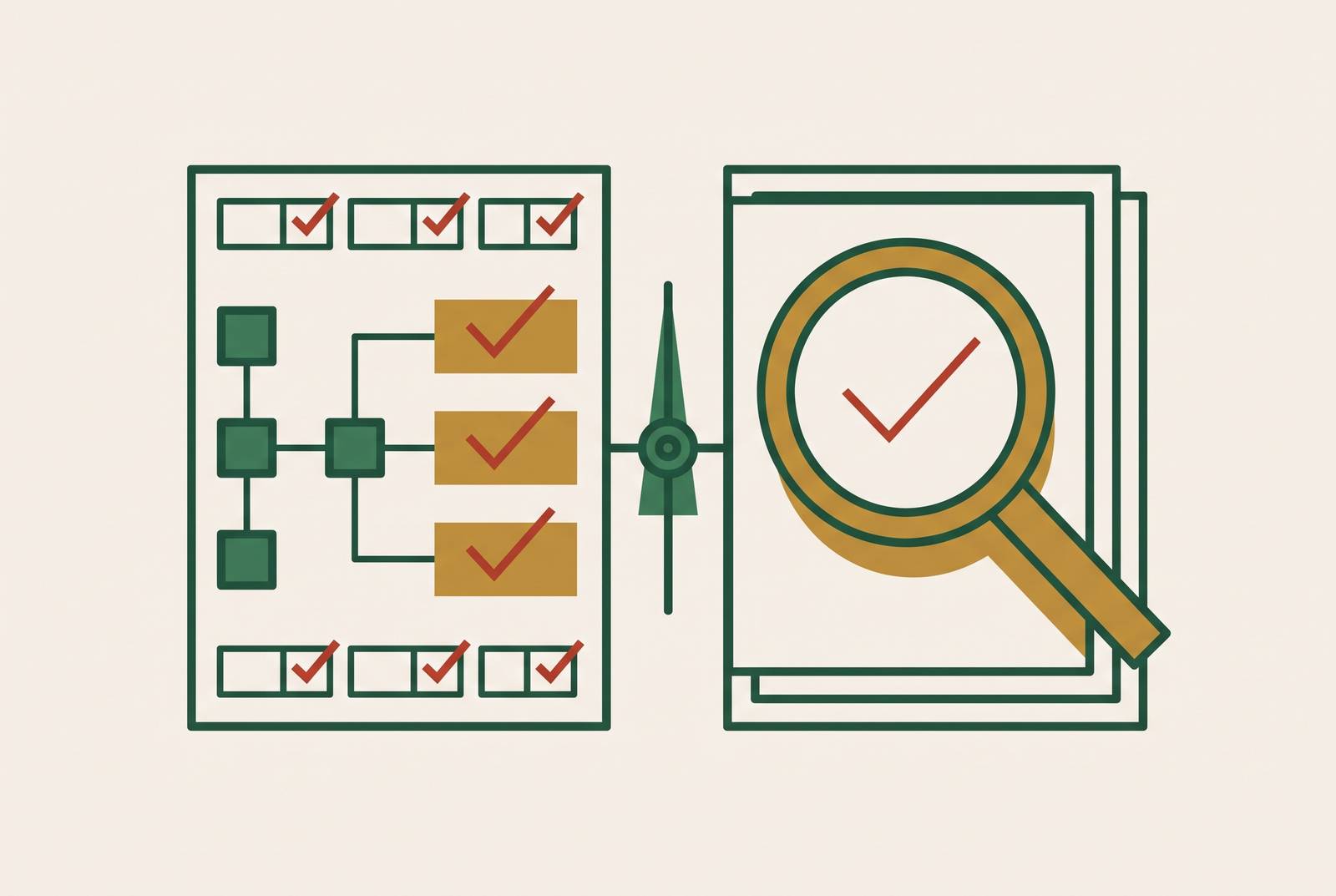
Quality control and quality assurance solve two different problems in a tax firm, and mixing them up is why so many firms buy the wrong software. QC catches errors in a return or a set of workpapers before it goes out the door. QA is the system of policies, staffing, and process design that keeps those errors from happening in the first place. A firm with sloppy intake and no task tracking doesn't need a sharper diagnostic engine. It needs a different layer of infrastructure entirely, and a lot of firms don't realize that until after the check clears.
What a quality control system in a tax firm actually encompasses
The accounting profession doesn't define quality control as a review step tacked onto the end of a return. It's the firm's organizational structure, policies, and procedures, all taken together, functioning as one system.
The AICPA's Tax Practice Quality Control (TPQC) system, reissued in February 2020, lays out six elements that make up this system: leadership responsibilities for quality, relevant ethical requirements, acceptance and continuance of client relationships and engagements, human resources, engagement performance, and monitoring. The formal definition is dry but worth sitting with: a TPQC system is a set of organizational structures, policies, and procedures that gives reasonable assurance of compliance with statutory, regulatory, and professional requirements. Reasonable assurance, not certainty. That distinction matters more than it sounds like it should.
Look closely at those six elements and the QA/QC confusion starts to make sense. Hiring, training, and client acceptance look like QA, upstream process design meant to prevent trouble. Engagement performance review and monitoring look like QC, downstream checks on finished work. The AICPA's own framework spans both functions under one name, which is exactly why practitioners use "quality control" to mean everything and end up shopping for the wrong tool. Knowing which of the six elements a platform actually addresses tells you, fast, whether it solves a QC problem or a QA one.
The regulatory pressure that makes getting this distinction right urgent right now
The AICPA's Statements on Quality Management Standards mark the biggest rework of the quality control framework in a generation, and the deadline isn't hypothetical anymore. SQMS No. 1, A Firm's System of Quality Management, came out in June 2022. Firms had to have a compliant system designed, implemented, and running by December 15, 2025.
The real shift isn't cosmetic. It's a move from a rules-based approach, where a firm proves policies exist, to a risk-based one, where a firm has to show its policies connect to risks it actually identified. SQMS 1 also expands the quality components from six to eight, building a more layered system. SQMS 2 zeroes in on engagement quality reviews: who gets appointed as reviewer, what makes them eligible, what they're responsible for, how the review gets performed, and what documentation has to survive it. Add SQMS No. 3, SAS No. 146, SSARS No. 26, and SSAE No. 23 to the pile, and the new framework leans hard into risk assessment and how firms manage their quality systems end to end. Firms under PCAOB oversight have their own clock running too: the interim QC Section 20 standard gets rescinded December 15, 2026, replaced by QC 1000.
None of this is theoretical stress. Reports around the effective date found few firms actually ready, because a risk-based system takes a lot more analysis to build than checking boxes against a rules list ever did. And here's where the QA/QC distinction stops being academic: SQMS 1's risk-based logic, process design, risk identification, ongoing monitoring, maps onto QA. SQMS 2's engagement quality review requirements, reviewer independence, documentation, formal sign-off, maps onto QC. A firm that treats these as one undifferentiated "quality" problem is going to over-build one side and leave the other exposed.
What QA and QC failures actually cost (in liability claims, audit deficiencies, and wasted review time)
The most recent public figure on this is from 2014, and it's worth flagging as dated, but the pattern it describes hasn't gone anywhere: 67% of claims in the AICPA Professional Liability Insurance Program traced back to tax planning and compliance services, and a pattern that points to quality control breakdowns across tax engagements. Defending a technical accounting claim runs $100,000 to $300,000 in legal fees alone, a number that can sink a small or mid-sized firm paying out of pocket.
Audit deficiency data shows the same failure mode playing out at scale. The PCAOB found deficiencies in close to half of all audit engagements it inspected in 2023. The Big Four's combined deficiency rate has hovered around 26% in recent years, with individual firms ranging from 18% up to 37%. RSM US, per the PCAOB's 2024 Inspection Report, came in at 41%.
Then there's the cost that never shows up on an income statement as "quality control failure," because it's buried in billable hours. Review time runs about 40% of the time a preparer spent preparing the return in the first place, and that's before counting the time spent fixing what the reviewer flagged or chasing down a client for a missing 1099. Firms with high review times tend to have high error rates driving that number up, which drives more review time next season. It's a loop, and it feeds itself.
Where QC actually lives in the software stack: tax preparation platforms and their built-in diagnostics
For most firms, QC isn't a separate purchase. It's built into whatever tax prep software the preparers already use every day, embedded in the return workflow as diagnostics that flag problems before e-file.
The 2025 tax software survey run by the AICPA and Journal of Accountancy, fielded June 2 through 20, 2025, drew responses from 2,011 AICPA members who'd prepared 2024 returns for a fee, and it rated the field on a 1-to-5 scale. Seven products have dominated this space for years. Judging any one of them on its QC merits means looking past price and interface familiarity to diagnostic depth, how well it supports reviewer workflow, multi-preparer access controls, and whether it leaves a clean audit trail for sign-off.
UltraTus CS, from Thomson Reuters, came out as the most-used tax prep software among CPAs in one survey, at 22.9% of respondents. It offers deep diagnostics, strong multi-entity support, reviewer workflows built for teams, and multi-monitor support, and it plugs into TaxCaddy and Onvio Firm Management for a broader process layer. Its biggest knock: 76% of users named price their top complaint in the 2024 survey, and licensing is custom-priced by user count and return volume.
Lacerte, from Intuit, ranked second among CPAs in the 2024 survey and topped the field for overall rating and ease of e-filing. It handles multistate business returns and complex consolidations about as well as anything on the market, and 73% of surveyed CPAs named ease of use their favorite feature. The tradeoff is resource use: it's expensive to license and can strain local servers without dedicated hosting.
CCH Axcess Tax, from Wolters Kluwer, leans cloud-forward with strong analytics and remote access, sitting at the premium end of pricing. Firms already inside the Wolters Kluwer ecosystem have reported efficiency gains as high as 15% in research-to-filing workflows in one analysis, though onboarding takes real change management to pull off.
Drake Tax fits small to mid-size firms well: fast interface, wide forms coverage, dependable e-file, built-in accuracy checks, and pricing that doesn't hide behind a sales call. It trades some polish for that value, and multi-user setups need dedicated hosting to perform well.
GoSystem Tax RS, also Thomson Reuters, is a web-based tax platform targeting the largest firms and corporate tax departments, with centralized administration and strong multi-entity handling. ProSeries, from Intuit, offers the familiar desktop workflow with solid forms coverage and both subscription and pay-per-return pricing, best run hosted if more than one person needs access. ProConnect Tax, also Intuit, fits remote or multi-location teams already inside the Intuit ecosystem, with per-return pricing that suits firms with lower or seasonal volume.
A firm picking a tax prep platform mainly for its QC function should weight diagnostic depth and reviewer controls over price and habit. Familiarity is comfortable. It isn't a quality metric.
Where QA actually lives in the software stack: practice management and workflow platforms
QA functions, client acceptance, intake, task assignment, deadline tracking, the order in which a reviewer sees a file, ongoing monitoring, don't live inside the tax prep software at all. They sit a layer above it, in practice management and workflow platforms.
These tools decide whether work lands with the right preparer, whether a deadline gets tracked before it's missed, whether a checklist actually gets followed, and whether a senior reviewer sees the return at the right point in the process rather than three days before the deadline. That's the process design meant to stop errors before QC ever has to catch one. Marble, an AI-powered assistant for tax professionals that answers federal and state tax questions with code and regulation citations and drafts client memos, sits earlier still, in the research and communication work that informs how engagements are structured from the start.
Some workflow automation tools are built for collaborative tax and accounting teams, with designs that support team visibility into where a piece of work actually stands. Others lean toward project and workflow management for accounting firms, supporting the kind of process consistency that keeps engagements from becoming ad hoc.
A platform on the QA side isn't reading the return. It's making sure the right people, the right steps, and the right checkpoints existed before the return was ever opened. Firms that spend their entire budget on a tax prep platform with sharp diagnostics, and skip the practice management layer, are investing all their money in QC while leaving the QA side of the house wide open. Purpose-built intake and document automation tools, the kind that handle client intake and document collection before a preparer ever touches the return, add a further layer of QA by cutting down the manual handoffs where errors tend to creep in.
How AI and automation are reshaping both the QA and QC layers, and where the adoption gap sits
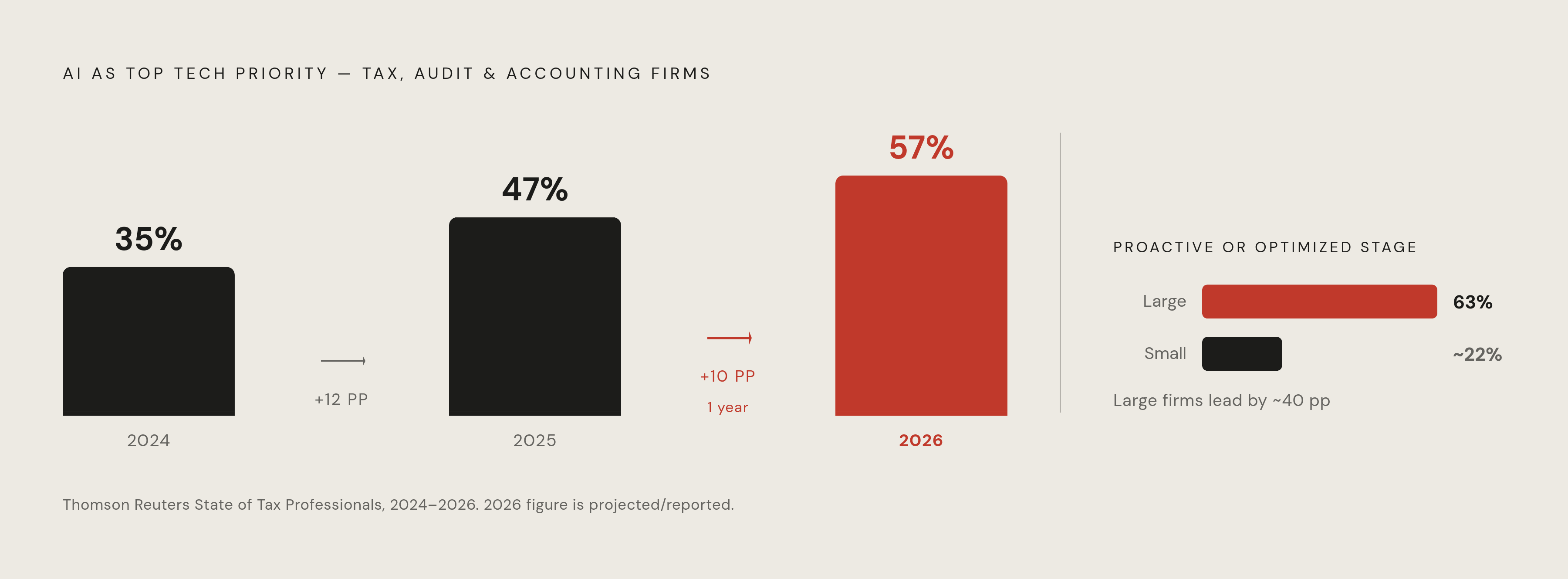
The Thomson Reuters 2026 State of Tax Professionals Report puts AI at the top of the technology priority list for 57% of tax, audit, and accounting firms, up from 47% in 2025 and 35% in 2024. That's not just growth, it's accelerating growth, which says something about how fast the ground is shifting under this whole conversation.
Automation adoption is broadening at the same time: 44% of firms now automate up to a quarter of their tax workflows, 27% automate up to half, and just 11% report no automation at all, down from 18% the year before. The Thomson Reuters Institute's 2026 AI in Professional Services Report found 34% of tax, accounting, and audit firms already using generative AI in their work, with another 47% planning or weighing it. But adoption isn't even across firm size: 63% of large firms sit in the proactive or optimized stage of tech development, while small firms lag well behind, a gap the data suggests will widen, not close, as AI capability keeps advancing.
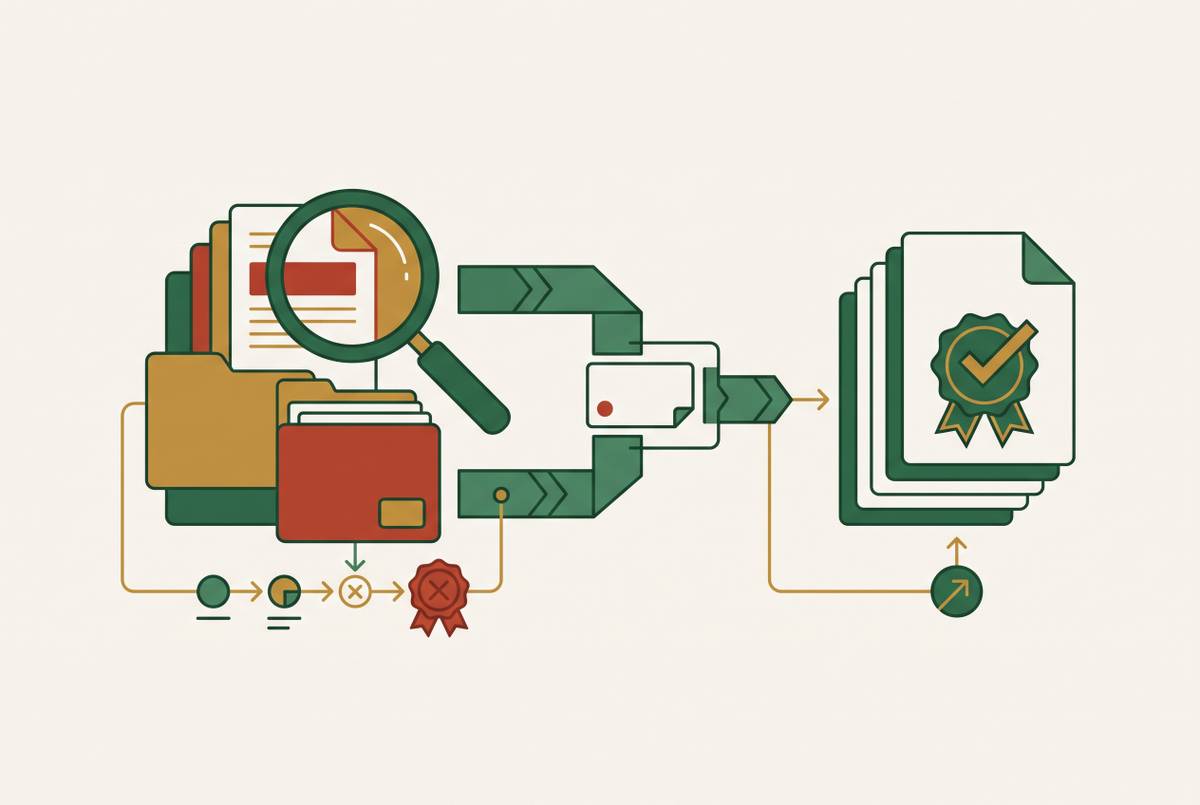
On the QC side, AI shows up in error detection before e-file, automated diagnostic flags, and inconsistency checks across a return, work that used to require a senior reviewer's eyes on every single line. On the QA side, it shows up in automated intake, document classification, workflow routing, and compliance pre-checks, cutting down the manual handoffs where mistakes get introduced before a preparer ever opens a file. The tools worth watching are the ones that blur that boundary on purpose: systems that automate intake and document review upstream while surfacing anomalies for a reviewer downstream, addressing both failure modes inside one workflow instead of two separate purchases.
Adoption still runs into the same wall everywhere. Per the 2026 State of Tax Professionals Report, firms widely cite lack of time, resources, and implementation cost as the top barriers to doing more automation, and the firms most likely to under-invest in this infrastructure are the ones already stretched thinnest, which is its own kind of irony. The Thomson Reuters Future of Professionals Report 2026 found 74% of professionals across legal, tax, audit, and compliance now use AI several times a week, yet 41% still don't have access to AI tools built specifically for professional work on verified, authoritative content. Generic tools leave a firm exposed on exactly the kind of accuracy question a tax practice can't afford to get wrong. That gap, purpose-built versus generic, tracks the QA/QC distinction almost exactly: a generic tool might flag something, but it won't tell you whether the flag belongs to a process failure upstream or a review failure downstream, and knowing the difference is the whole point of getting this right.