How Mid-Size CPA Firms Assign QC Checkpoint Ownership Separately From QA Oversight Roles
Firms must separate who performs QC checkpoints from who evaluates whether the system works.
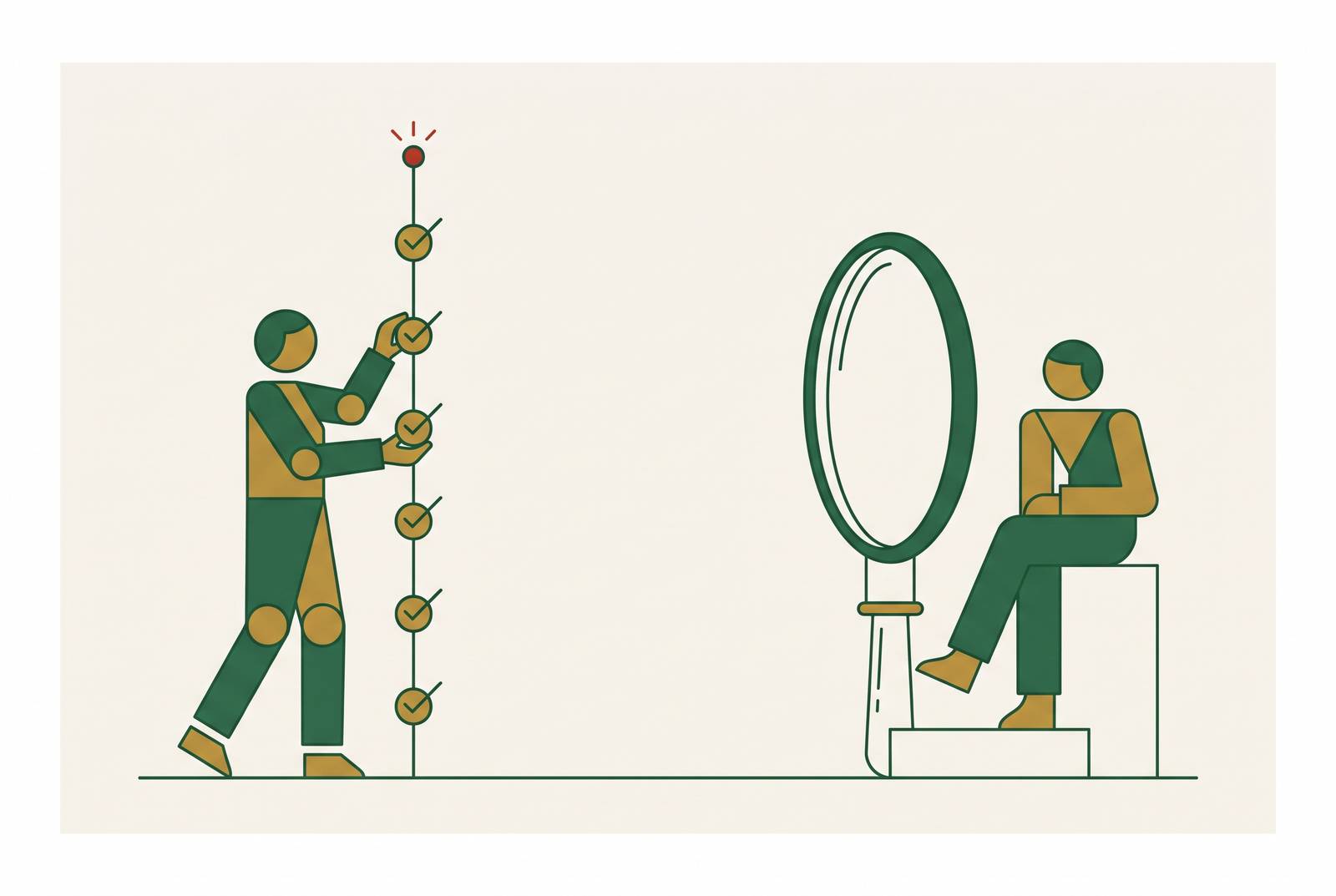
Mid-size CPA firms separate QC from QA by assigning engagement checkpoints to named owners and assigning evaluation of those checkpoints to an oversight function with a direct reporting path to leadership. QC produces engagement decisions. QA evaluates whether the system produces reliable decisions across engagements. Under SQMS No. 1 and QC 1000, this distinction must be reflected in authority, reporting relationships and evidence of work.
Why SQMS No. 1 and QC 1000 force mid-size firms to rethink who owns what in quality management
The AICPA’s SQMS No. 1 has an effective date of December 15, 2025, for covered firms, while the PCAOB’s QC 1000 becomes effective on December 15, 2026. Both move quality beyond a policy document. Firms must design a system, assign responsibility for its components and evaluate whether it works. For mid-size practices, this changes what it means to rely on a senior partner’s judgment and time.
The weakness is an arrangement in which the quality partner title substitutes for defined execution, monitoring and accountability. A partner may retain operational responsibility for quality management, but the firm still needs a credible evaluative function. Informality therefore becomes a design problem when nobody can distinguish responsibility for completing a check from responsibility for assessing its effectiveness.
What the standards actually require when they say "roles and responsibilities" for quality management
SQMS No. 1 requires ultimate responsibility and accountability for the system of quality management to rest with firm leadership, typically the CEO, managing partner or managing board of partners. It separately requires assignment of operational responsibility for the system and specific aspects of it to appropriate individuals. Monitoring and remediation must also have an owner who evaluates results and feeds findings into the system’s design.
The standard also requires a documented risk assessment. The firm must identify and assess quality risks by likelihood and impact, then design responses targeted at those risks. SQCS No. 8 did not require documentation of the underlying risk assessment. Consequently, checkpoint ownership must follow the risk being addressed rather than the convenience of the organization chart. Assigning a review to a partner is incomplete unless the firm can explain what risk that review addresses.
For QC 1000, the engagement quality reviewer’s objectivity requirements are contained in the PCAOB’s AS 1220. The reviewer must not make decisions on behalf of the engagement team or assume its responsibilities. Leadership responsibilities alone do not preclude a partner from reviewing a subordinate’s engagement.
“QC checkpoint ownership” and “QA oversight” are useful operational labels for this article’s framework, rather than interchangeable names for the standards’ assigned responsibilities. Monitoring and remediation most closely correspond to QA oversight. An independent engagement quality reviewer still performs an engagement-level checkpoint. This distinction prevents firms from treating the presence of an EQR as proof that their oversight structure is complete.
How mid-size firms have historically conflated QC and QA, and why that conflation becomes a compliance problem now
The familiar mid-size structure concentrates quality responsibilities in a senior partner, often the quality control partner or managing partner. That partner sets policies, reviews high-risk engagements, receives complaints and evaluates the quality system. The arrangement has a practical explanation. Mid-size firms have a mix of service lines and risks but fewer people than a Big Four firm has. Consolidating responsibility has been a rational response to limited capacity, and it does not imply that the resulting engagement work was poor.
A partner who owns checkpoint execution and evaluates the adequacy of those checkpoints cannot provide an independent signal about their own design. Monitoring may miss weaknesses that the checkpoints were never designed to detect. This setup also gives the partner a reason to find that the controls work, even when no one is trying to hide unfavorable findings.
SQMS No. 1 requires firms to share monitoring findings with firm leadership and use them to update the system. That feedback loop needs more than confidence in the quality partner. It needs an evaluative process capable of challenging the work under review. A peer reviewer examining a partner’s assessment of their own checkpoint system would therefore face a structural question.
How do firms separate QC checkpoints from QA oversight in tax and accounting engagements?
A QC checkpoint owner is accountable for a defined intervention at a defined point in an engagement. Examples include the engagement quality reviewer responsible for EQR sign-off before report release, the tax technical reviewer providing tax position concurrence and the partner approving client acceptance. Each checkpoint produces a documented decision. Its owner answers for completion at the point when the engagement requires that decision.
QA oversight evaluates the checkpoint system across engagements and over time. Findings about system performance may show that smaller tax engagements skip technical review or that client acceptance fails to capture concentration risk well enough. They go to leadership with authority to act, rather than stopping with the checkpoint owner whose process is being evaluated.
QC looks forward at engagement risk and intervenes before the relevant work proceeds, while QA looks backward for patterns that warrant changes to the system. To perform that assessment, oversight needs access to engagement files and outcome data without depending on the checkpoint owner’s cooperation. Otherwise, the person being evaluated can effectively determine the evidence available to the evaluator.
In tax review, technical concurrence and monitoring do different jobs even when both involve reviewing files. The technical reviewer decides whether a complex position clears its checkpoint. The oversight role evaluates whether the checkpoint is triggered, completed and effective across the relevant engagement population. Applying this distinction to tax workflows provides a practical design model without treating tax concurrence as an EQR requirement.
Structural models mid-size firms use to assign these roles without adding headcount they don't have
A small rotating committee of non-quality partners reviews the quality partner’s monitoring findings annually and reports directly to leadership. The quality partner retains checkpoint execution, while the panel evaluates whether the checkpoints work. No new position is necessary. For this split to work, the panel must be able to judge the evidence on its own rather than simply agree with the quality partner’s conclusions.
An external quality advisor, who is an outside practitioner or practice management consultant, does monitoring and remediation work from time to time, which can suit firms in the ten-to-thirty-partner range where an internal panel lacks the time or independence for the work. This model changes who performs the evaluation. It does not remove leadership’s responsibility for the system or the need for a reporting path that permits action on findings.
A service-line structure distributes checkpoint ownership among audit, tax and advisory QC partners. A separate managing partner or executive committee is then responsible for oversight across those lines. This preserves specific ownership without concentrating every checkpoint in one person. Its suitability, like that of the other models, depends on firm size, service mix and partner structure. The title is less important than whether oversight can surface a problem independently of its owner.
External peer review can inform these structures, but it cannot replace ongoing monitoring. Firms in peer review networks or AICPA practice-monitoring programs may use external review as part of the evidence for oversight. Internal monitoring is still required between peer review cycles. An external assessment therefore supplements the firm’s evaluative work rather than becoming its entire QA function.
What the documentation of role assignments must show to withstand peer review or regulatory scrutiny
A peer reviewer or PCAOB inspector needs to see how the work done matches the responsibility assigned. For a checkpoint, the documentation identifies the responsible individual or rotating role, defines its trigger and records the outcome of each instance. The trigger gives the assignment practical meaning. Without it, a named owner does not establish when review was required, and a completed sign-off does not explain whether the checkpoint operated as designed.
Oversight documentation answers a different set of questions. It identifies who monitors, how often monitoring occurs, what engagement or process population is reviewed and how findings reach leadership. That communication path establishes whether the evaluator has standing to raise concerns beyond the checkpoint owner. A finding kept within the function under review gives less evidence of independent oversight than one shared with someone who can require remediation.
The quality manual alone cannot establish execution. A monitoring findings log gives a reviewer evidence of an active feedback loop by showing what work was done, what was found, what remediation was proposed and whether it was carried out. Independence safeguards also need documentation. For a cross-partner panel, a record that a participant had no involvement in the engagements reviewed makes the basis for objectivity visible.
How automation of routine intake and compliance work affects who can realistically hold these roles
The practical limit is often partner capacity. Practitioners qualified to own checkpoints or evaluate them already have billable and client-facing responsibilities, so quality work compresses when those demands intensify. Taking in documents by hand, doing initial compliance checks, setting up engagements and tracking their status take time that could go to technical judgment or monitoring. Separating titles does little if the oversight role still receives only the margins of an overloaded partner’s schedule.
Automating repeatable, low-judgment work can change who can credibly accept the assignment. It cuts the time spent on triage for engagements and frees people to keep looking for patterns across files. That is particularly relevant to review bottlenecks caused by mixed QC and QA responsibilities. When engagement approvals and system evaluation compete for the same person’s limited attention, one function can crowd out the other.
Purpose-built tax workflow automation addresses this constraint through the structure of the engagement. Such systems can flag checkpoints that have been triggered but are still incomplete, bring together the engagement populations to be monitored and keep the documentation trail that oversight needs. The distinction from a general accounting platform is whether the workflow supports tax engagement checkpoints and monitoring evidence, rather than requiring those functions to be adapted around a general-purpose design.
Software can reduce the administrative cost of operating an independent reporting relationship and make a previously overstretched partner a more realistic oversight candidate. The firm must still decide who owns the decision, who evaluates the process and who can require a change. Automation enables that structure only when the released capacity supports those assigned responsibilities.
What a well-designed role split looks like end to end, and how firms can audit their current structure against it
A well-designed workflow begins with a defined risk and a checkpoint response assigned to a named owner. At client acceptance, the responsible partner records the approval decision. When a complex tax position triggers technical concurrence, its reviewer records the outcome, while any EQR that applies is a separate engagement-level review before report release. These decisions form the execution record. They do not, by themselves, demonstrate that the system is effective.
The monitoring function then evaluates the relevant engagement population and reports findings to leadership above the checkpoint owners. Leadership uses those findings to update the system, and the remediation record shows whether the proposed changes were made. This completes the accountability loop. Oversight has evidence to evaluate, checkpoint owners have decisions to answer for and leadership has responsibility for acting on weaknesses.
A firm’s structural audit can test these relationships without just counting policies. First, the firm asks whether every defined checkpoint has an identifiable owner. The second is whether the firm can identify who evaluates checkpoint effectiveness and where that evaluator reports. The third is whether recent records show that monitoring occurred and produced documented findings. An unclear answer exposes a design gap when the underlying responsibility, authority or process has never been established.
That distinction determines what must change. Missing evidence cannot be repaired credibly by documenting a role that nobody has authority or capacity to perform. Firms designing these relationships before effective-date pressure forces a reactive response have more room to establish genuine authority.
Sources
- QC 1000, A Firm’s System of Quality Control (effective on 12/15/2026)
- QC 1000, A Firm’s System of Quality Control (effective on 12/15/2026)
- Implementing the AICPA's New Quality Management Standards - The CPA Journal
- AICPA Releases New Quality Management Standards
- AS 1220: Engagement Quality Review
- What to know about engagement quality reviews (SQMS No. 2)
- SQMS 1 explained: A guide to firm-level quality management
- 8 steps to build your firm’s quality management system on time