Structuring a Tax Firm Review Process With Distinct QC and QA Workflow Stages
Separating quality assurance from quality control prevents partners from firefighting during review.
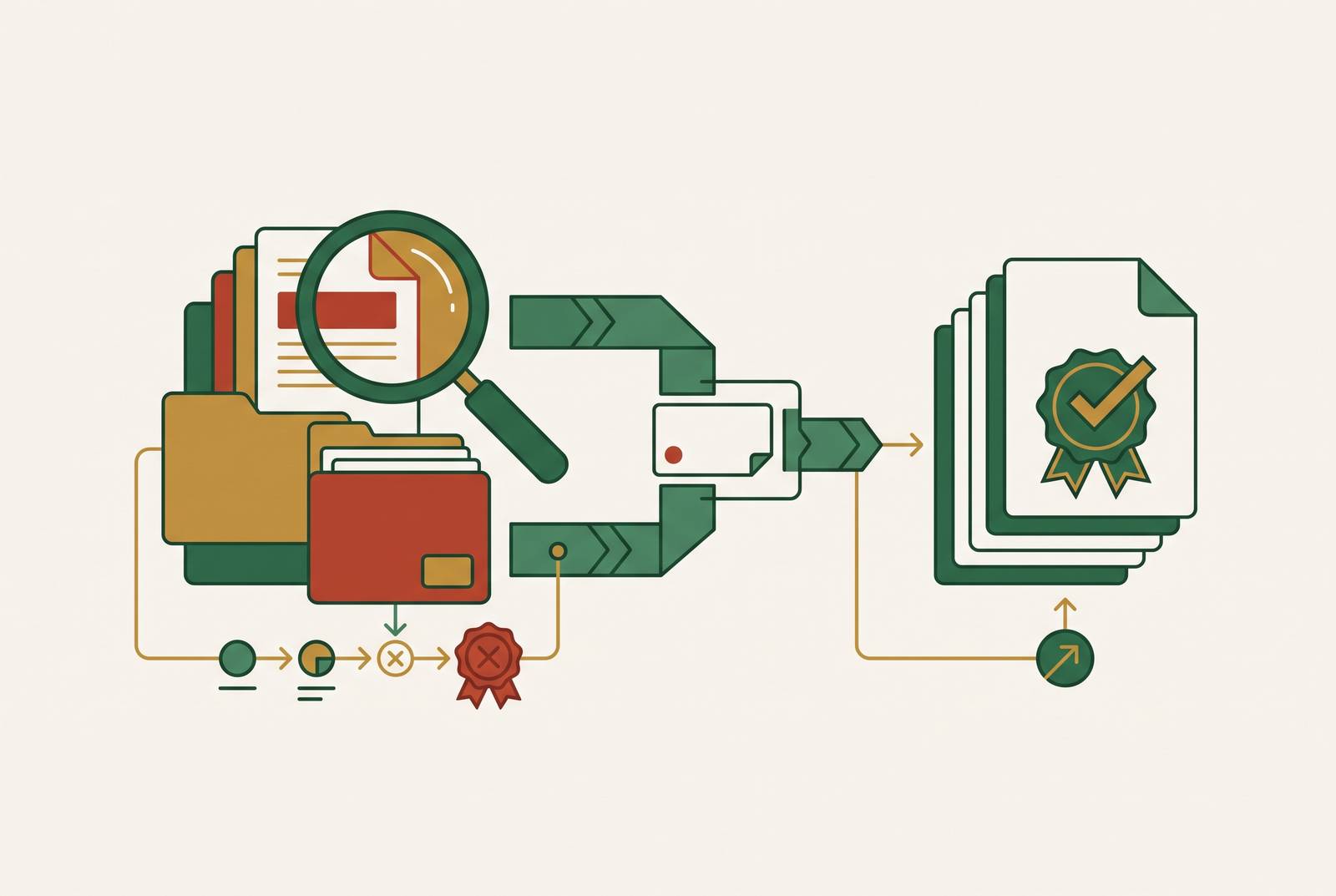
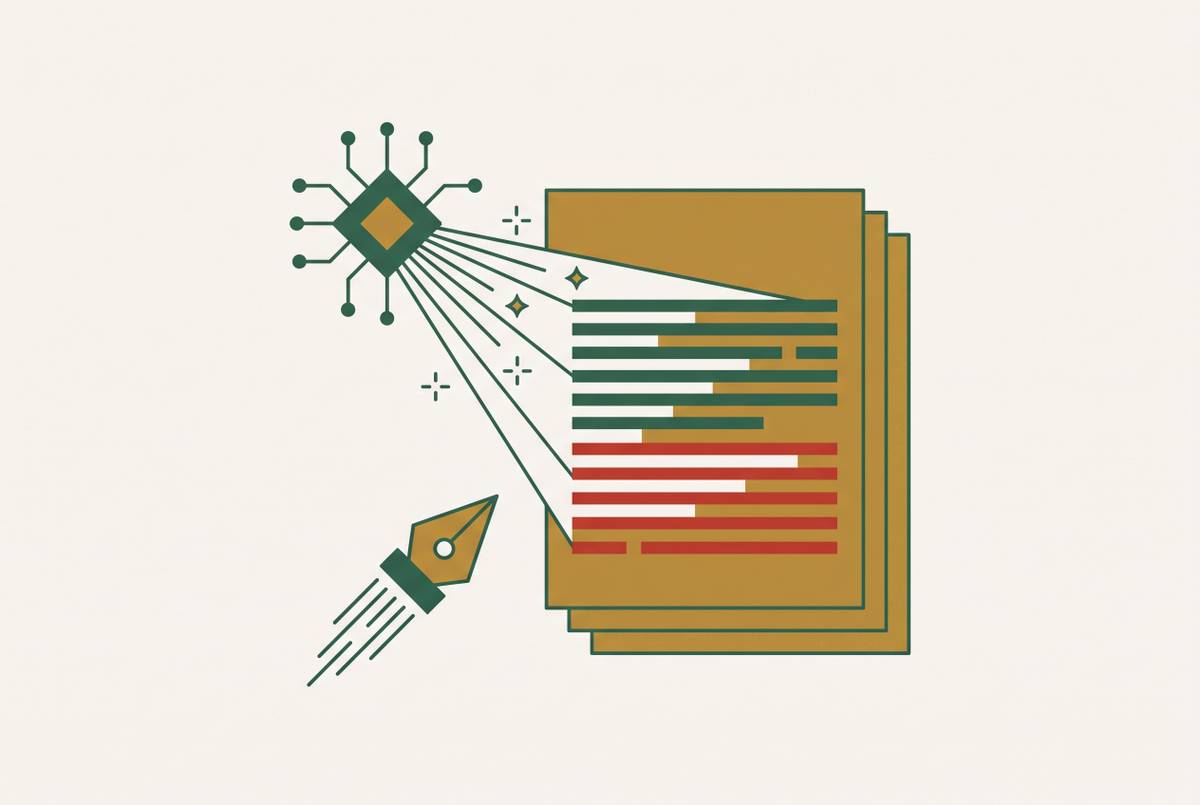
A stack of returns sits in partner review the week before deadline. Some are genuinely ready to sign. Others are missing a preparer's note, a client document, an answer to a question that should have been resolved days earlier. The partner cannot tell the difference until opening the file, so every return gets the same treatment: a full read, start to finish, under deadline pressure. That scene repeats at firms of every size because most tax practices run one review step where the work actually requires two. Quality assurance and quality control get folded into a single label, "review," even though they ask different questions at different points in the pipeline. QA asks whether the firm's systems are capable of producing a good return before anyone builds one. QC asks whether the specific return in front of the reviewer actually is good. Collapse those two questions into one step and firms systematically over-invest in late-stage inspection while under-investing in the upstream process design that would have prevented the defects QC is now stuck catching, which is exactly the pattern that produces escalating rework and partner overload during busy season. Quality in a tax engagement means an accurate return with applicable tax law benefits applied, planning opportunities identified, and red flags eliminated before they can trigger a notice or audit, and no amount of inspection at the end of the line can substitute for the process controls that should have been in place at the start.
How the conflation creates the review bottleneck
The review bottleneck that partners complain about every March and April is not fundamentally a capacity problem. The symptom is a pile of returns waiting on one or two senior reviewers, but the cause sits upstream: a QA failure that appears downstream as QC overload. Files arrive at review in wildly different states. Some are complete and clean. Others are missing client documents, carry unresolved preparer questions, or need cleanup work that should have happened before the file ever reached a reviewer's desk. None of that cleanup is a QC problem. It exists because no QA gate standardized what "ready to prepare" means before production began, so inconsistency that should have been filtered out at intake now has to be filtered out by the most expensive person in the building.
When output quality varies this much, partners stop being reviewers and start being firefighters. They become final reviewers, issue resolvers, and workflow coordinators all at once, which is the least scalable response a firm can reach for and the most expensive in terms of billable time lost to triage rather than advisory work. The cost compounds with timing: an error caught by the reviewer costs far more to fix than the same error caught by the preparer, because by the time it reaches review, the file has already absorbed hours of work built on a flawed foundation. Seasonal staff make the pattern worse, not better. Preparers unfamiliar with a firm's documentation standards and reviewer expectations produce inconsistent files that generate more clarification cycles, and clarification cycles are not a reviewer problem that more inspection solves. They are an intake and training problem that no amount of careful reading at the review stage can retroactively fix. The bottleneck concentrates where it always does, at the final review step, and partners diagnose it every season as a staffing or scheduling issue when the actual cause sits several stages earlier.
What QA covers in a tax engagement pipeline
QA is the set of upstream design decisions that keeps a file moving through production without defects. It operates before the return is built, and its value is almost entirely invisible at the moment of review, because a well-designed QA layer means the reviewer never sees the problems it prevented.
The clearest, most tangible QA gate is intake. Standardizing what counts as a "ready to prepare" file, with every source document present and legible, the prior-year return accessible, and open questions from the previous engagement resolved, stops defects before production begins. Returns arrive at review in inconsistent states precisely because firms have no upstream gate enforcing this standard before production begins. That is the kind of routine intake standardization an AI tax research and drafting platform built for practitioners can help systematize, by embedding structured client document context and citation-backed guidance directly into the intake stage so firms can catch missing documentation and unresolved preparer questions before files ever reach a reviewer.
QA extends beyond intake into several other firm-level decisions: engagement acceptance criteria that determine which clients and engagements the firm takes on, documentation standards staff must follow before handoff, escalation protocols that tell preparers when to stop and ask rather than guess, and training that aligns everyone on what reviewers will actually expect to see. At the firm-governance level, this maps directly onto the risk-based quality management framework the AICPA's SQMS No. 1 requires: identifying quality risks, designing responses to those risks, and monitoring whether the system is actually working as designed. The PCAOB's quality control standard describes the same logic for registered firms, covering governance and leadership accountability, ethics and independence policies, engagement acceptance and continuance, and resource allocation, all of it positioned upstream of any individual engagement review. KPMG's governance architecture offers a useful illustration of what this looks like as a structural layer: accountability runs from the board down through a National Managing Partner for Audit Quality and Professional Practice, through the National Office, down to local engagement leadership. That hierarchy exists above and before engagement-level inspection, which is the whole point. QA is architecture. QC is inspection. A firm cannot build the second without first committing to the first.
What QC Covers
QC occupies a specific, bounded position in the pipeline: after preparation, before sign-off. Its job is output inspection, not upstream remediation, and firms that let QC absorb intake cleanup or documentation chasing are asking the most expensive stage in the pipeline to do the cheapest stage's job.
The mechanics are straightforward. A preparer builds the return from client documents. A reviewer, typically a senior or a manager, checks that return against those documents and against the firm's standards before anyone signs it. A file should be considered ready for QC sign-off only when all reviewer checklist items are marked complete, all preparer questions are resolved, and the file is assembled correctly. Ambiguity about that threshold creates a specific, avoidable failure: phantom bottlenecks, where returns sit technically finished but not officially approved because nobody can say with certainty whether the file is actually done.
The hierarchical structure most firms already use for review maps naturally onto QC. Tax associates complete initial analysis under supervision. Tax managers review for technical accuracy and client suitability. Senior partners give final approval on complex strategies and significant engagements. That structure works when QC's scope stays bounded to genuine inspection. It breaks down when QC also has to absorb the document-chasing and clarification cycles that QA should have filtered out earlier.
QC carries one more obligation that often gets dropped: feedback. Deficiencies found during engagement review are data, and that data should flow back to the QA layer to show where process design needs improvement. Under QC 1000, engagement performance is one of eight integrated quality control system components, but it functions as one part of a larger system rather than a replacement for it. The engagement-level review is QC. The system surrounding it, the one that decides what gets built and how, is QA. Without a deliberate path for QC findings to travel back upstream, every defect the reviewer catches gets fixed once and then recurs on the next file, because nothing about the process that produced it has changed.
Sequencing QA and QC as distinct gates
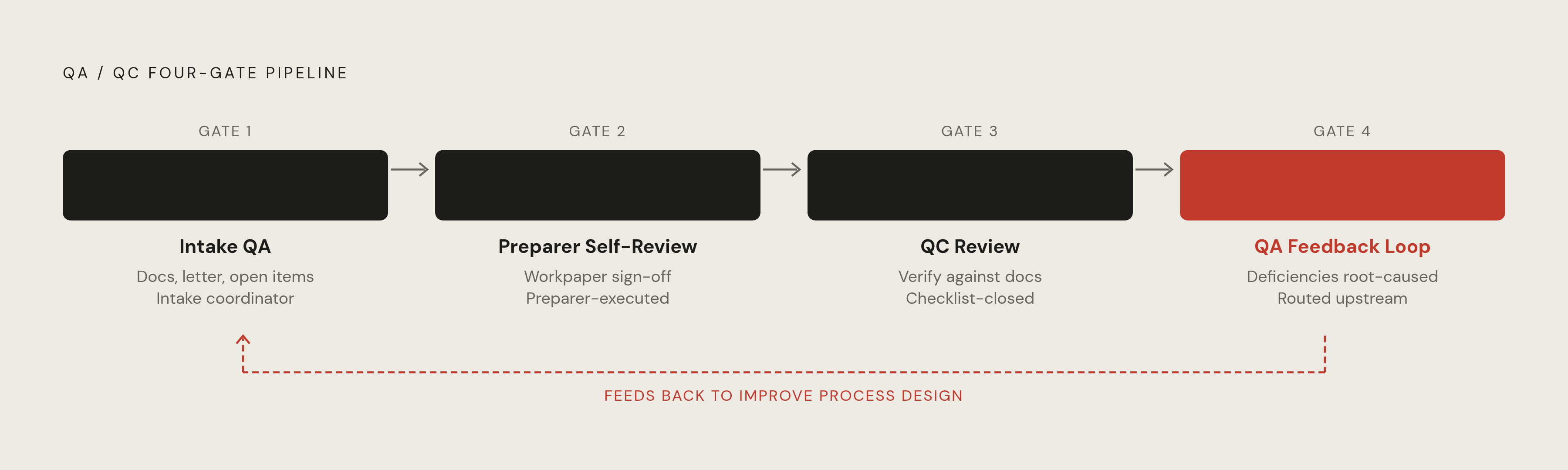
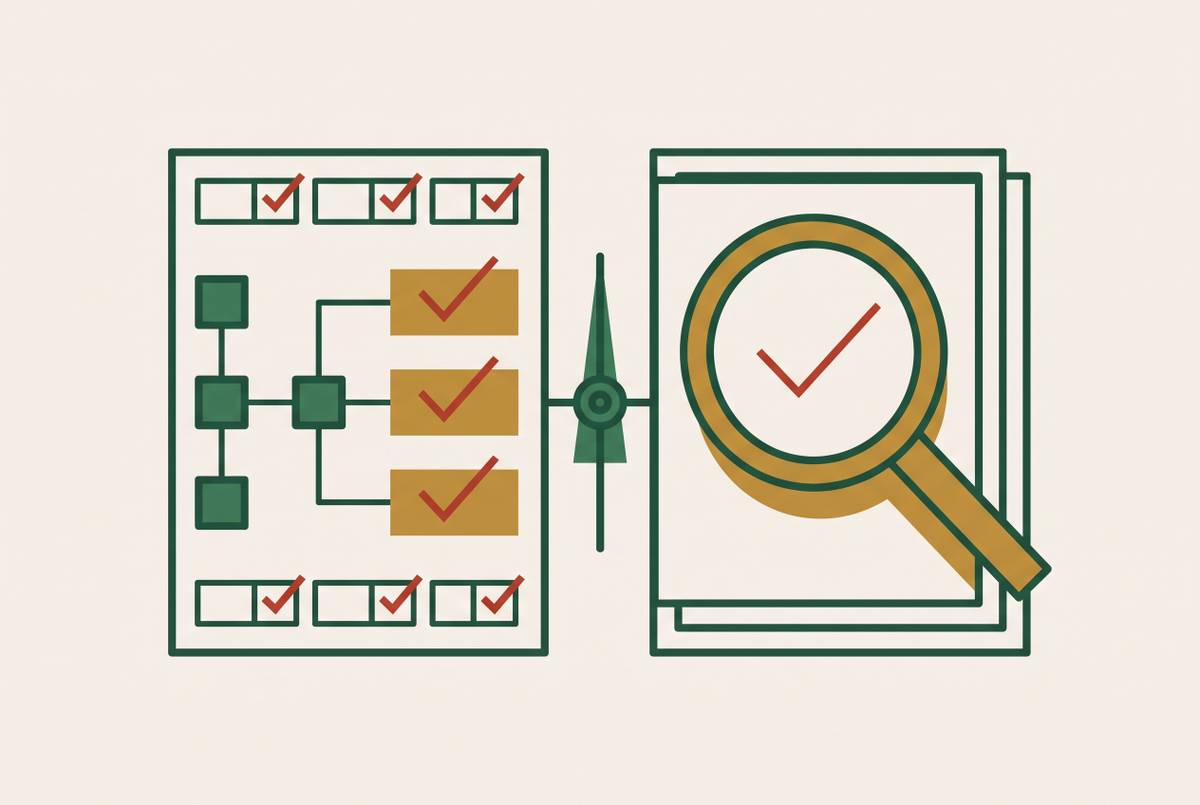
Separating QA and QC into distinct, named gates reduces total rework because each gate catches a different category of problem at the point where it is cheapest to fix. A simple four-gate structure makes the distinction operational rather than theoretical.
Gate 1 is intake QA. A standardized set of criteria defines what counts as a complete, workable client file before preparation starts: source documents present and legible, prior-year return accessible, open items from the previous engagement resolved, engagement letter signed. Files that fail the standard go back to client services, not forward to preparers. A dedicated intake coordinator, or a clearly defined preparer pre-check, owns this gate, not the reviewer.
Gate 2 is preparer self-review. Before handoff, the preparer completes a standardized workpaper sign-off confirming every document has been traced, every open item flagged, every note written. This is a QA-designed checkpoint executed at the preparer level, and it is not QC, because no independent review has taken place yet. Errors caught here cost a fraction of what the same errors cost if caught at the reviewer's desk.
Gate 3 is QC review itself. The reviewer inspects the completed return against the client's documents and the firm's standards, and the scope stays limited to output verification rather than intake remediation. Crowe LLP's adoption of Thomson Reuters Additive to convert unstructured Schedule K-1 data into structured inputs shows what this looks like when it works: structured data arrives at the QC gate, not raw documents still requiring extraction, which frees the reviewer to spend time on genuine judgment calls instead of data wrangling. A checklist defines when the gate closes: all items marked, all preparer questions resolved, file assembled. There is no ambiguity about when QC is finished.
Gate 4 is the QA feedback loop. Deficiencies surfaced in QC get documented, traced to a root cause, and routed back to the QA layer that designed the process. Without this gate, QC findings accumulate as a record of recurring problems without ever improving the system that keeps producing them.
The objection that four gates add more overhead than one review step misreads where the work already lives. The overhead already exists; it is buried inside reviewer rework and partner escalation. Naming the gates explicitly does not create new work. It relocates existing work to the stage where it costs less to perform.
Where automation fits into each stage
Automation reduces defect volume at the QA stage and reduces verification burden at the QC stage, but no tool can take over either stage entirely without degrading the judgment that gives the stage its value.
At the QA stage, automation does its best work on tasks that are repetitive, rules-based, and upstream of any real judgment call: document completeness checks, missing-item follow-up, data extraction. AI agents that read client inputs, identify missing documents, and send follow-up requests on their own can move a file to a genuinely "ready to prepare" state without consuming a preparer's or a reviewer's time. That is the structural intervention QA automation is meant to deliver: automate the upstream preparation work so the QC stage is left to handle only the judgment calls that actually require a trained reviewer. Marble's approach to automating the repetitive backend of a tax engagement, client intake, document review, compliance checks, maps directly onto these QA gates, which leaves QC review for the practitioner judgment that actually moves the needle for a client's outcome.
At the QC stage, automation does its best work on structured data verification: cross-checking figures against source documents, flagging computational errors, surfacing inconsistencies across workpapers. Technical judgment remains the area where human reviewers are strongest, and AI is limited wherever a facts-and-circumstances analysis is required. Final sign-off cannot be delegated to a tool under any circumstances, because it carries professional responsibility that belongs to the licensed practitioner alone.
QA's documentation standards and escalation protocols, the rules that tell a preparer when to stop and flag an issue rather than guess, benefit substantially from codified, searchable tax guidance. Marble maintains a library of federal and state statutes and regulations alongside the ability to draft memos grounded in that authority, which lets practitioners bake authoritative citations directly into the documentation standards and training that define their QA layer.
The strongest objection to automation as a general fix deserves a direct answer. Firms that automate without restructuring their workflow stages find that bottlenecks simply move downstream: faster preparation means more returns arrive at the QC gate faster, which intensifies reviewer overload instead of relieving it, unless review capacity scales at the same time. Automation applied to one stage without a corresponding gate structure does not solve the conflation problem. It just makes the conflated step move faster toward the same bottleneck.
The QA/QC distinction as a compliance requirement
Regulatory standards from the AICPA and the PCAOB have now formalized the QA/QC distinction at the firm-system level, and firms that still collapse the two into a single review step are operating below the baseline the profession has set, not merely running an inefficient process.
AICPA SQMS No. 1 required firms to have their system of quality management designed and implemented by December 15, 2025, with the first formal evaluation of that system due by December 15, 2026. Designing the system was step one. Proving it actually works is the step many firms are working through right now. SQMS No. 1 expands quality components from six to eight, introduces a risk-based approach, and requires firms to connect their policies directly to identified risks, none of which a quality control manual alone can satisfy, because a manual describes inspection while the standard demands a designed system.
The PCAOB quality control standard, QC 1000, takes effect December 15, 2026, and requires registered public accounting firms to design, implement, and operate a comprehensive quality control system that proactively identifies and manages risks to audit quality. That proactive, system-level orientation is QA described in regulatory language. The standard was built to align closely with SQMS No. 1 and with international quality management standards, so firms that have already built SQMS-compliant systems have a solid foundation for the incremental requirements QC 1000 adds. QC 1000 also amends and retitles AS 2901, which governs how firms respond to engagement deficiencies after a report has already been issued, the post-issuance remediation layer that closes the feedback loop at the regulatory level. Monitoring under the PCAOB standard requires firms to maintain evidence, track results, identify deficiencies, assess their nature and severity, and remediate root causes. A firm with no documented feedback loop from QC findings back to QA process improvement has no answer to that requirement, and as of December 2026, no answer is no longer an option regulators will accept as sufficient.
Sources
- What to know about the new PCAOB auditing standards for 2026
- QC 1000, A Firm’s System of Quality Control (effective on 12/15/2026)
- What to know about the new quality management standards
- Marble | AI Tax Software for Tax Professionals
- Quality Assurance vs Quality Control: QA vs QC
- The importance of tax quality control