Tax Workflow Platforms With Configurable Preparer and Manager Review Stage Permissions
Configurable role permissions enforce tax review handoffs and prevent engagement stalls.
The central problem in tax firm workflow is not the tax calculation itself but the handoffs around it. Who can move a return forward, who must sign off before it advances, and what happens when those boundaries are enforced only by convention rather than by the software determine whether a firm scales or stalls. Clients submit incomplete information, staff chase missing documents, and engagements sit in review queues without clear ownership. These are handoff failures, and they have a specific architectural solution: stage-level access control.
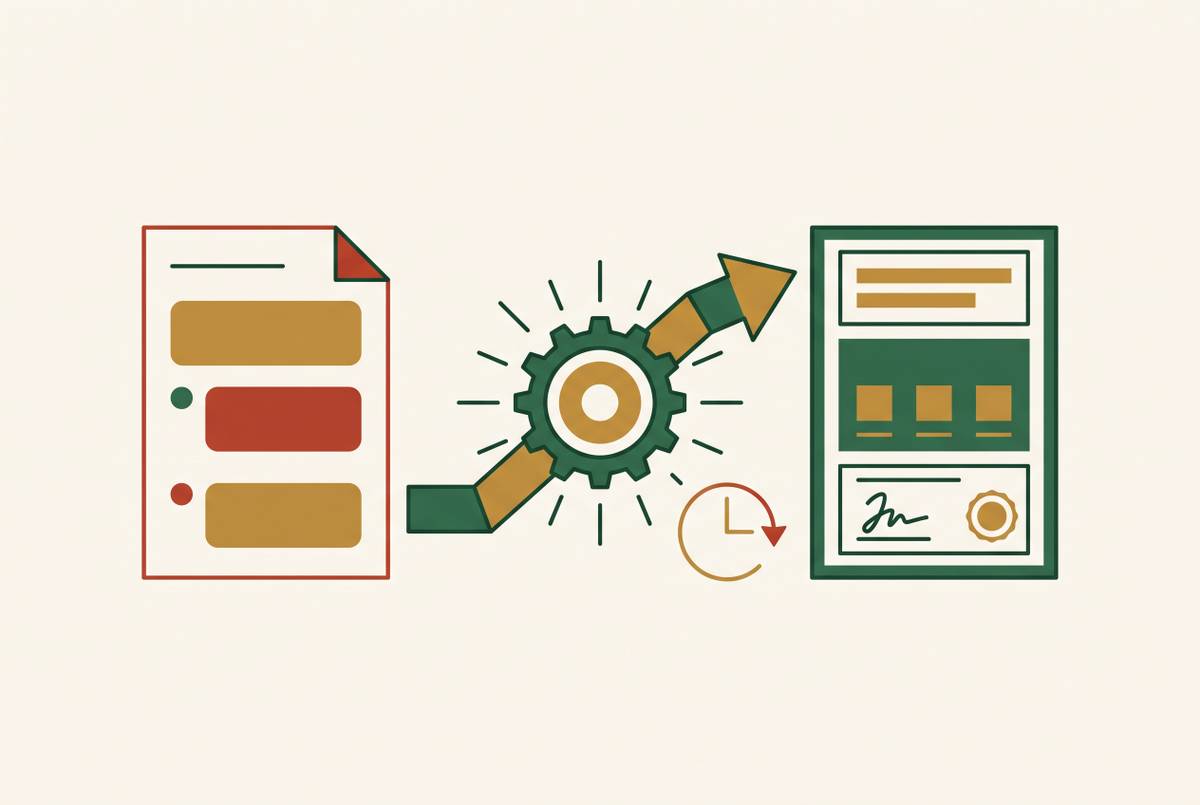
What separates a scalable firm from an overwhelmed one is not return volume. It is how cleanly information, tasks, and decisions move from intake through delivery without administrative effort growing at the same pace. Tax calculation software handles forms, diagnostics, and e-file. It does not tell a partner that a return has been waiting in review for weeks, that the reviewer is over capacity, or that the client has received duplicate follow-up from different staff members.
The handoff problem compounds because most firms run multiple review tiers by convention rather than by mechanism. A junior preparer completes the return, a senior accountant reviews it, a manager approves it, and a signing partner takes final responsibility. When that hierarchy exists only in memory, every transition depends on someone remembering to route the work correctly. The software may be functioning properly while the engagement grinds to a halt.
Stage-level permission control addresses this directly. It prevents a return from advancing until the holder of the required role performs the required action, turning a verbal handoff into a durable record. The next section defines that mechanism precisely, because the granularity with which a platform implements it is the single most important evaluative criterion for tax workflow software.
What role-based stage permissions actually are and why their granularity determines their value
Role-based access control applied to workflow stage transitions means something specific: a permission policy links a user group, a role, and a resource group to determine which functional rights a user holds and which clients they can act on. The policy is the unit of control, not just the role label. A user assigned to the reviewer role may hold different rights over engagement A than over engagement B, depending on how the resource group is configured. This distinction matters because it moves the conversation from who someone is to what they can do, and on which work, at which moment.
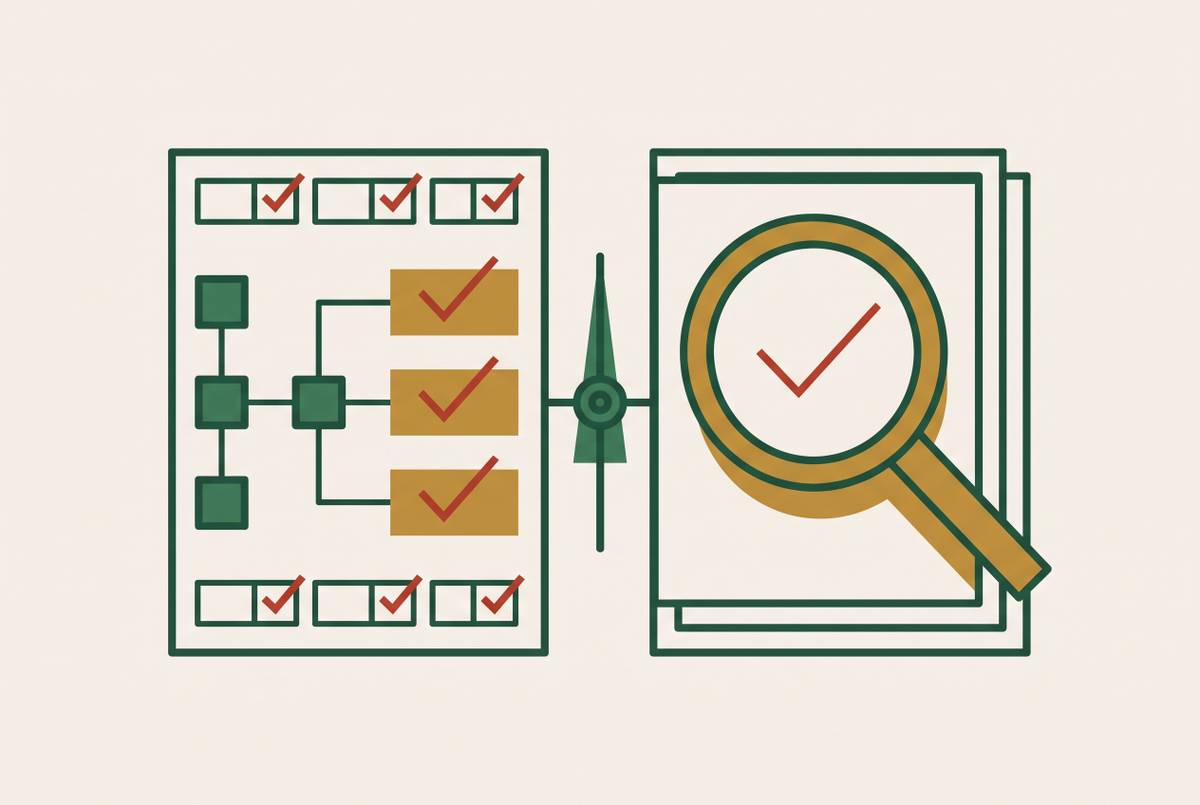
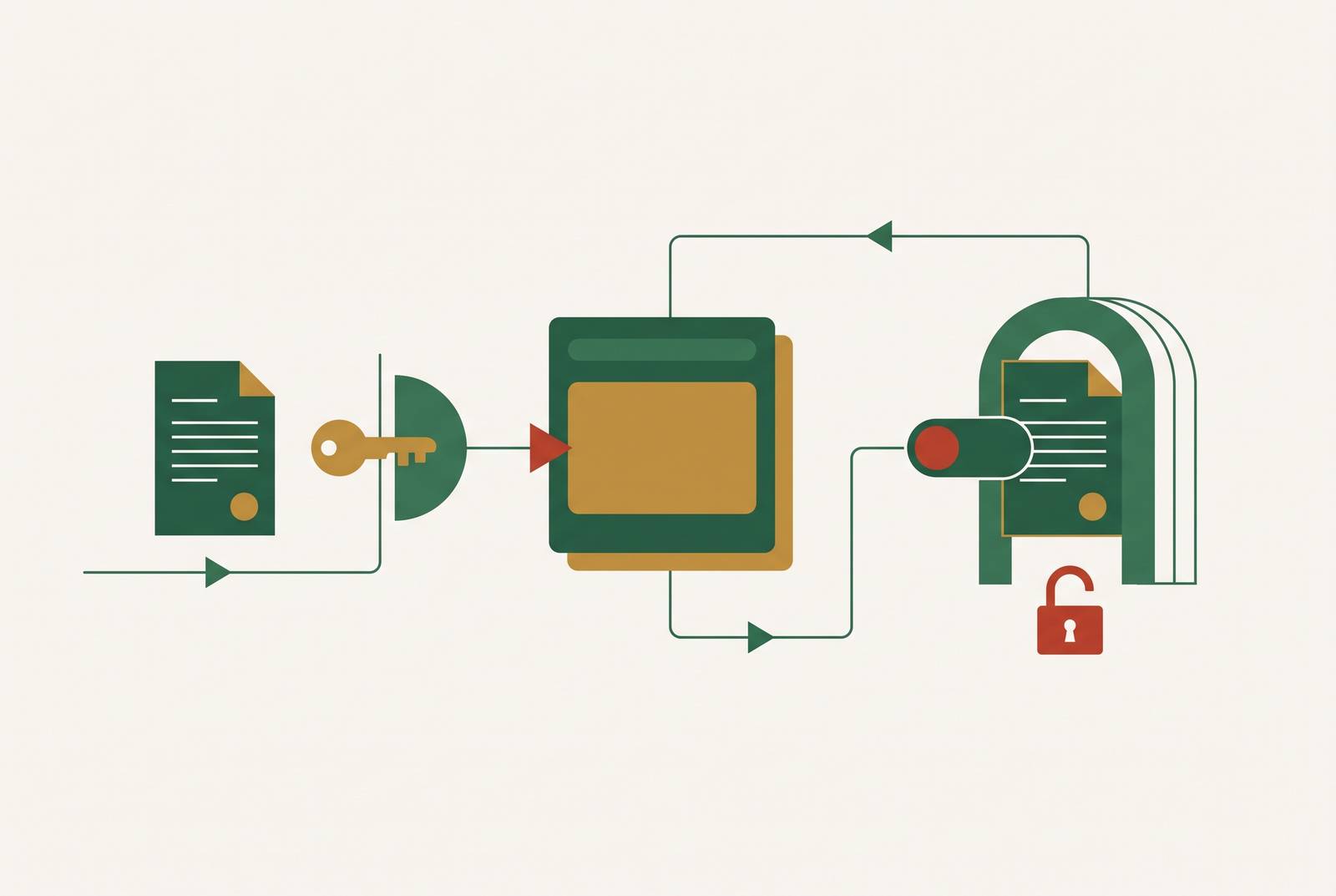
Stage gating is the enforcement layer that makes role definitions consequential. A signed-off stage becomes a durable record, not a convention that depends on memory or goodwill. When a platform enforces stage gating, a return cannot advance from preparation to review until a user holding the preparation role marks the stage complete and a user holding the review role takes the required action. The mechanism is mechanical: the system checks permissions at each transition point and refuses to advance work that lacks the required sign-off.
The granularity question determines whether this mechanism approximates a firm's actual hierarchy or forces the firm to adapt to a generic structure. Coarse systems assign users to broad role buckets, typically preparer and reviewer. Granular systems let a firm say, for each stage and engagement type, what each role can do. The difference between these two approaches is the difference between a tool that mirrors the firm's review structure and one that requires the firm to compress its structure into the tool's assumptions.
Audit logs are not optional extras in this architecture. They note each permission grant, revocation, role change, and access attempt, with a timestamp and user. Internal control frameworks require this record, and it becomes the firm's evidence trail during review preparation. Granular permissioning, enforced at the stage level and recorded in an audit log, is the mechanism that prevents both stall and drift.
Marble: purpose-built stage-permission architecture for tax practitioners
Marble, an AI platform built for tax practitioners, automates the routine backend of client intake and document review. That automation reduces the administrative friction that creates stalled queues and ownership gaps in the first place, so practitioners can focus on advisory work rather than managing handoff bottlenecks. The design origin matters here: Marble was built for tax workflows from inception, not retrofitted from generic accounting software, and that origin produces a stage-permission model that mirrors how preparer-manager-partner hierarchies actually operate inside a tax firm.
The practical consequence of purpose-built design is that the role and stage configuration reflects the actual structure of tax engagements. Marble's stage-permission model is built around the actual division of labor inside tax firms from inception: preparers initiate and advance, managers review and approve, partners sign off. The permission architecture already assumes the hierarchy exists and is consequential.
This permission model runs from the first client contact through final delivery, if you configure intake automation. Document collection and routing can be governed by the same permission structure as the review stages that follow, so the permission boundary is not applied only at the review checkpoint. The intake stage and the review stage share one permission model, which means the handoff from document collection to preparation is as controlled as the handoff from preparation to review.
With Marble, you avoid the configuration cost and customization ceiling that come with generic or bundled platforms. You are not locked inside a vendor's structural constraints borrowed from a non-tax use case, such as generic project management. Marble suits firms of any size that need to enforce distinct preparer and manager permissions across every engagement type without standing up a complex administration layer first.
CCH Axcess Workflow and Workstream: enterprise-grade stage control for large practices
CCH Axcess Workflow sits at the high end of the complexity-and-capability spectrum for established enterprise options. It is designed for tax and accounting teams and integrates with other CCH Axcess solutions including CCH Axcess Tax, so workflow permissions and return preparation operate inside the same ecosystem. Because of that integration, a stage-gated workflow can pull status directly from the tax preparation environment, so you do not synchronize manually.
The platform promotes accountability through structured workflows with process history and real-time status. Multiple management levels can monitor compliance risk concurrently, which matters for multi-office practices where a regional manager and a national partner need simultaneous visibility into the same engagement. CCH Axcess Workstream adds project tracking, due-date monitoring, and process mapping into standardized steps with dashboards, notifications, and resource visibility, giving partners a capacity view that coarse role assignment alone cannot provide.
The practical tradeoff is implementation effort. The capability ceiling is high, but reaching it takes time. It suits large or multi-office practices, corporate tax departments, and firms already in the CCH Axcess ecosystem that need governance across many departments and staff levels.
Thomson Reuters ONESOURCE Workflow Manager: permission control for corporate tax departments
Thomson Reuters ONESOURCE Workflow Manager addresses the corporate tax filing process specifically. It combines document management, data management, and collaboration tools with customizable permissions, automatic backups, and access control for staff, with activity tracked through a full audit trail. The permission and audit models are integrated rather than separate modules, so every permission-gated action lands in the same record that internal control reviews will later examine.
Use ONESOURCE task management to prioritize and monitor tax tasks, track due dates, and see every filing stage at project level. Business entity management extends the permission model to entity-level data governance: the platform manages owners, contacts, geographic locations, tax ID numbers, and intercompany transactions. Integration with other ONESOURCE solutions via APIs keeps workflow permissions and underlying tax data in the same controlled environment.
SmartVault: stage-gated workflow built around document lifecycle and delivery
SmartVault approaches the same underlying problem from a different structural axis. It structures tax preparation workflow as five connected stages, Engage, Collect, Prep & Review, Deliver, and Archive, but the control mechanism is attached to the document object rather than to a task stage. Version history tracks itself, and audit logs record document activity, so the permission boundary follows the file through the workflow.
At the Collect stage, SmartRequestAI assembles documents and answers into one prep-ready workpaper automatically. The structured folder integration covers Lacerte, ProConnect, ProSeries, UltraTax, and Drake, with automatic print-to-vault routing on Lacerte and ProConnect. At the Deliver stage, integrated eSignatures with KBA verification, real-time signature status, and optional payment gating before release create a controlled handoff governed by delivery permissions. A client cannot receive the completed return until the signing and payment conditions are met.
Jetpack Workflow: lightweight stage visibility for smaller or simpler pipelines
Jetpack Workflow occupies the lighter end of the capability spectrum. It is built around a stage-based pipeline that keeps each return's progress visible to staff, with role-aware task assignment designed to reduce misrouted prep work. Case activity logs keep your review trail consistent, and the stage pipeline gives preparers and reviewers clear ownership without elaborate role hierarchies.
The tradeoffs are honest and concrete. If you need deep customization of stage permissions or complex multi-tier approval chains, you will hit the ceiling, but a simpler actual process may not need it. You still have to design your workflow so stages, tasks, and roles reflect your firm's standards, and exception handling needs care to avoid dead ends.
How to match a firm's actual review structure to the right platform
The right platform is not the one with the most configurable permissions in the abstract but the one whose permission model maps to how the firm's review structure actually works across its different engagement types. A mismatch in either direction creates friction rather than reducing it. An over-engineered permission structure burdens a firm whose process is simpler. An under-granular one forces a complex firm to compress its hierarchy into buckets that do not fit. The strongest objection to complex RBAC systems is workflow-fit mismatch, and it cuts both ways.
Firms should begin with their own workflow, not the feature list. Does the firm run one approval tier or three? Do business returns follow a different path from individual returns? Do high-risk or complex clients require additional sign-offs that routine clients do not? The answers determine how much granularity the platform needs to provide, and no feature comparison can substitute for that self-examination. The best tax workflow software is the one built around the firm's actual workflows, not the one with the most options.
A related risk is the customization ceiling disguised as flexibility. Bundled platforms that offer workflow configuration may constrain you within the vendor's structural assumptions, borrowed from a non-tax use case. Platforms designed specifically for tax workflows, such as Marble, embed role and stage hierarchies into their foundation rather than retrofitting permission models from generic accounting software. The permission architecture reflects how tax firms really operate, so you can enforce the preparer-manager-partner hierarchy on every engagement without workarounds.
Cascading revalidation is an emerging architectural requirement worth evaluating. Where a material upstream change affects an already-approved return version, the system should reopen the appropriate review gates and invalidate superseded approvals rather than leaving stale sign-offs in place. Not all platforms handle this automatically, so if your engagements involve frequent late-breaking client information, ask the question directly.
The matching logic by firm type is as follows. If you want integrated RBAC from intake through delivery, built for tax without adapting a generic tool, evaluate Marble. Large or multi-office practices and firms in the CCH Axcess ecosystem needing multi-department governance should evaluate CCH Axcess Workflow and Workstream. Corporate tax departments with multi-entity, multi-region filing and internal control requirements should evaluate ONESOURCE Workflow Manager. Firms whose permission model centers on document lifecycle and client-facing delivery, particularly on Lacerte or ProConnect, should evaluate SmartVault. Smaller practices that need structured pipeline visibility with a low setup burden and can accept a shallower permission ceiling should evaluate Jetpack Workflow.
Fit and granularity together determine value, not either alone. A platform with enormous permission depth that fights the firm's actual process will not solve handoff failures. It will add a new layer of administrative friction. A platform whose granularity matches the firm's review structure, enforced mechanically at each stage transition, turns the handoff from a recurring risk into a durable record. That is the criterion on which the entire comparison rests, and the criterion that determines whether tax workflow software earns its place in the firm.